

If you want industry-facing engineering, hands-on projects and a trimester rhythm built around internships, UNSW usually fits better. If you want a heritage campus, standout medicine and humanities programs, and a traditional two-semester year, USYD tends to be the stronger match. That’s the short answer to “usyd vs unsw.” The longer answer depends on your course, because the gap between these two Group of Eight universities is rarely about overall prestige and almost always about the specific degree, campus rhythm and career path you’re chasing.
Both schools sit in the Group of Eight, Australia’s cluster of research-intensive universities, so neither is a “safe” or “risky” pick in any broad sense. The differences that matter show up at the program level: which faculty has the stronger industry pipeline, whether the calendar suits your work schedule, and whether the campus itself feels like home for three or four years.
A few things drive the decision more than anything else:
- Subject strength — UNSW leads on engineering and technology; USYD leads on medicine, law and humanities.
- Teaching calendar — UNSW runs a trimester and flexible-semester structure; USYD keeps a traditional semester system.
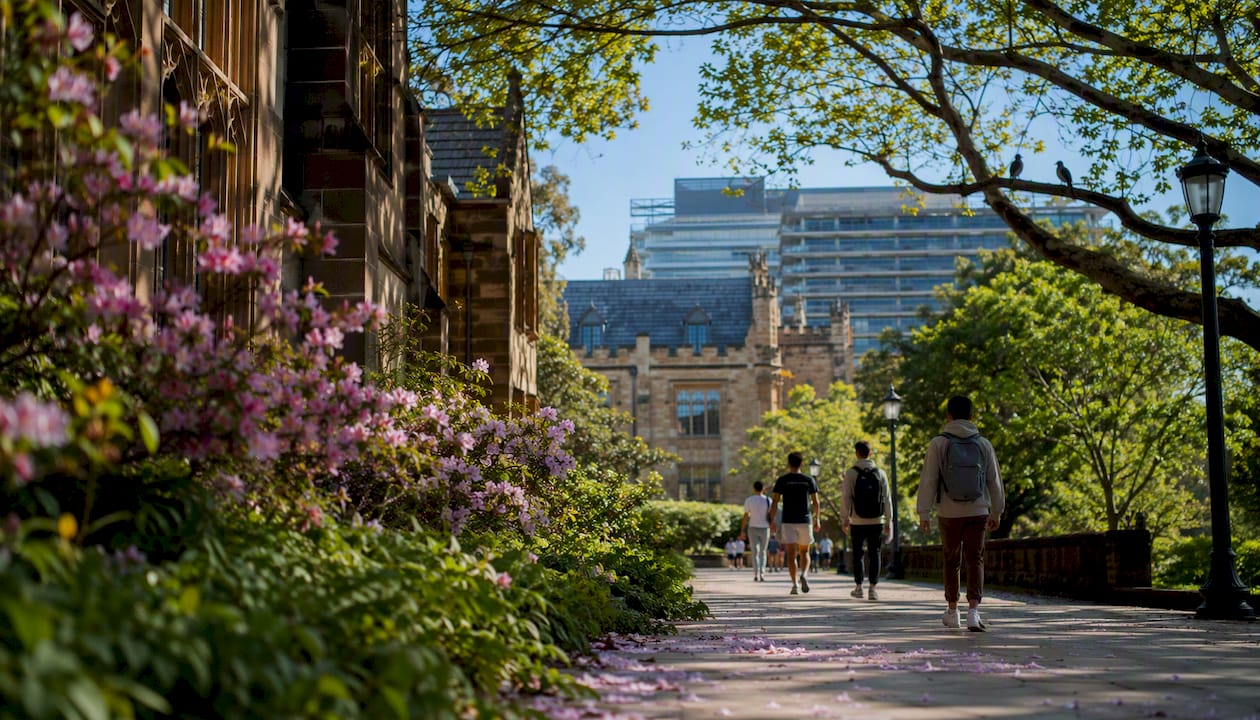
- Campus vibe — USYD’s sandstone Camperdown/Darlington campus sits next to Newtown and the CBD; UNSW’s Kensington campus functions more like a self-contained university town near the eastern beaches.
- Employability pathway — both have strong graduate outcomes, but they get there differently, through industry partnerships at UNSW and research pedigree at USYD.
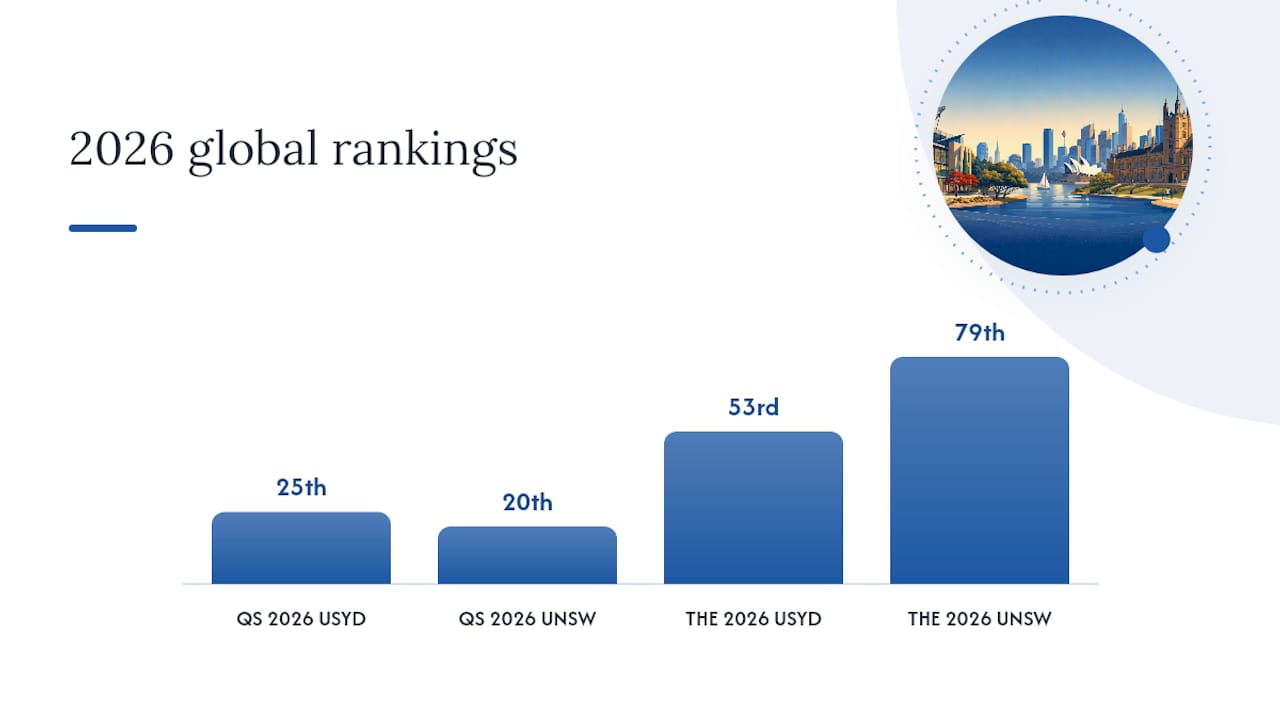
On global rankings, the picture flips depending on which system you trust. In the 2026 QS World University Rankings, UNSW sits at 20th globally and USYD at 25th. Times Higher Education’s 2026 table reverses that, putting USYD at 53rd and UNSW at 79th. Neither number tells you which university is right for your degree. The comparison table below does a better job of that.
Key Takeaways
Choosing between USYD and UNSW comes down to matching your specific course and calendar preference to each university’s real strengths, not comparing overall rankings.
| Point | Details |
|---|---|
| Rankings disagree by design | QS 2026 ranks UNSW 20th and USYD 25th; THE 2026 ranks USYD 53rd and UNSW 79th, so check the methodology behind each ranking. |
| Pick by discipline | UNSW usually leads in engineering and computing; USYD usually leads in medicine, law and humanities. |
| Calendar changes your pace | UNSW’s trimester model reshapes internship timing versus USYD’s traditional semester system. |
| Fees vary by course, not just university | International Commerce tuition runs higher at USYD than UNSW, but every course should be checked individually. |
| Get guided support before applying | Fewa’s coaching and student visa services help you align your course shortlist with a realistic visa timeline. |
Table of Contents
- USYD vs UNSW: Quick Comparison of Key Stats
- Which University Is Better for Your Discipline?
- How Hard Is It to Get Into USYD or UNSW?
- What Daily Life Looks Like on Each Campus
- Semester or Trimester: How the Calendar Shapes Your Study Pace
- Which University Gets Better Graduate Outcomes?
- A Straight Checklist for Choosing Between USYD and UNSW
- Visa, Work Rights and Relocation Basics for International Students
- Research Opportunities and Facilities at Each University
- Clubs, Societies and Life Outside the Classroom
- Get Guided Help Choosing Between USYD and UNSW
- Sources
USYD vs UNSW: Quick Comparison of Key Stats
Here’s the side-by-side snapshot, built from rankings data, published fee comparisons and each university’s own program pages.
| Dimension | University of Sydney (USYD) | UNSW Sydney |
|---|---|---|
| QS World Ranking 2026 | 25th globally | 20th globally |
| THE World Ranking 2026 | 53rd globally | 79th globally |
| Standout subjects | Medicine, law, humanities, arts | Engineering, business, technology |
| Admissions difficulty | High for medicine, law, health sciences | High for engineering, actuarial studies, medicine |
| Tuition direction (international) | Generally higher for Commerce-equivalent degrees | Generally lower for comparable Commerce degree |
| Campus & location | Heritage campus adjoining Newtown and the CBD | Consolidated “university town” campus near eastern beaches |
| Student life & societies | Large clubs and societies scene tied to inner-city culture | Strong project-team and industry-club culture |
| Teaching calendar | Traditional two-semester year | Trimester and flexible-semester options |
| Graduate outcomes | Strong in health, law, research-linked fields | Strong in engineering, IT, business, industry placement |
| Cost of living | Inner-west/CBD rents, moderate commute options | Eastern-suburbs rents, beach-adjacent lifestyle premium |
A note on the numbers: rankings move depending on the weighting a ranking body gives to research citations, employer reputation or internationalization, which is why QS and THE disagree on the order. On fees, Study in Sydney’s comparison found that the annual international tuition fee for a Bachelor of Commerce is higher at USYD than at UNSW, a gap that compounds across a standard three-year degree. Treat every fee figure as a starting point. Course-level pages change year to year, and a double degree or lab-heavy science course will price differently than a standard commerce degree.
Which University Is Better for Your Discipline?
Picking a university by discipline gives you a much sharper answer than picking by overall brand. Here’s how the two compare, field by field.
Engineering. UNSW usually has the edge. It’s built a genuine engineering culture around industry-aligned Bachelor of Engineering (Honours) programs, strong subject rankings in engineering-related fields, and a dense ecosystem of student project teams that partner directly with employers. USYD’s engineering culture tends to be more collaborative and peer-led inside labs, suiting students who prefer a research-oriented path rather than a project-focused one.

Medicine and health sciences. USYD tends to hold the reputational edge here, backed by a long research history in health faculties. Both universities run selective entry with UCAT scores, interviews and additional criteria beyond an ATAR, so check the exact pathway (undergraduate versus graduate-entry medicine) before assuming either school is more “accessible.”
Business and commerce. This is closer to a coin flip. USYD’s business school leans on brand recognition and a large alumni network in finance and consulting; UNSW Business School leans on analytics, quantitative finance and strong employer partnerships. If tuition cost is a deciding factor, the fee gap noted above tends to favor UNSW for a standard Commerce degree.
Law. USYD’s law school carries deep historical weight and strong placement into top-tier firms and the judiciary. UNSW Law is no lightweight, with a reputation for social justice and clinical legal programs, but USYD often holds an advantageous position for students pursuing traditional prestige pathways.
Computer science and advanced computing. UNSW typically is recognized for strong industry engagement which complements its engineering reputation. Its computing degrees lean into applied projects and closer ties with tech employers.
Humanities, arts and social sciences. USYD is the stronger pick for most students here, with broader course offerings and a research culture that spans history, philosophy, media and the social sciences.
Pro Tip: Don’t compare universities. Compare the actual unit outline, practicum structure and industry-placement rate of the specific program you’re applying to. A university’s overall reputation tells you almost nothing about whether its third-year elective list matches your career plan.
How Hard Is It to Get Into USYD or UNSW?
Comparing whole-university entry scores is one of the most misleading habits prospective students fall into. An ATAR or selection rank published for “UNSW” or “USYD” as a whole is an average across dozens of degrees with wildly different cutoffs. Medicine, dentistry and law sit far above the university-wide median; some arts and science majors sit well below it. The only number worth trusting is the one attached to your specific course for the year you’re applying.
On fees, the gap is real but course-dependent. The Study in Sydney comparison found international Commerce tuition running higher at USYD than at UNSW on an annual basis, and that difference multiplies across a three-year degree. Domestic students face a different structure entirely, since government-regulated contribution bands set most undergraduate fees rather than the university itself, which is why domestic and international costs should never be compared as if they’re on the same scale.
| What to check | Why it matters | Where to find it |
|---|---|---|
| ATAR or selection rank for your exact course | University-wide averages hide selective-program cutoffs | Course page on sydney.edu.au or unsw.edu.au |
| Extra entry requirements (UCAT, portfolio, interview) | Medicine, law and design courses often require more than an ATAR | Faculty admissions page |
| English language requirements | International applicants need IELTS/TOEFL/PTE minimums that vary by course | University international admissions page |
| Annual tuition for your specific degree | Fees shift yearly and by course, not just by university | Official fee schedule for the program |
| Available scholarships | Merit and equity scholarships can offset a large share of tuition | University scholarships portal |
Before locking in a shortlist, confirm your English test requirements early. Fewa has a guide to English language requirements for Australian student visas that’s worth reading alongside each university’s own admissions threshold, since visa English requirements and course entry requirements aren’t always identical.
What Daily Life Looks Like on Each Campus
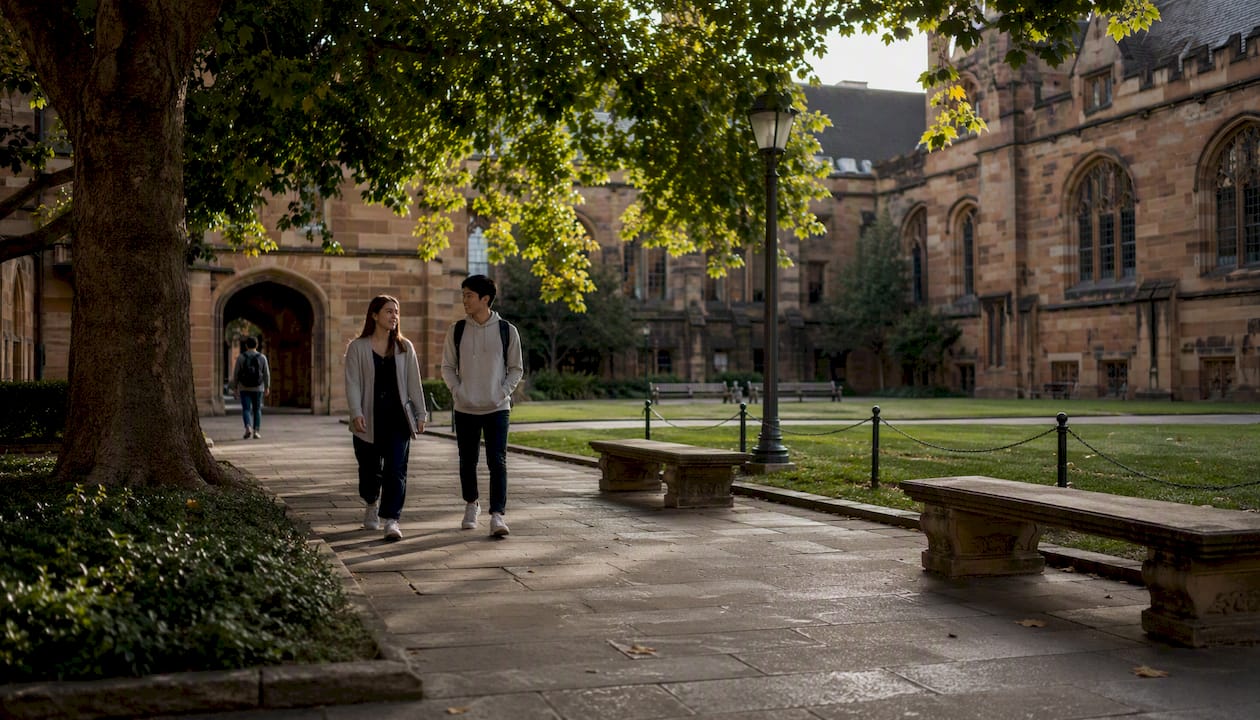
USYD’s Camperdown/Darlington campus is genuinely old. Sandstone quadrangles, a park-like feel, and a location that puts you a short walk from Newtown’s cafes and a train ride from the CBD. The university’s own student life pages describe a campus dense with food, retail and city-adjacent amenities, which shapes a fairly urban, plugged-in daily rhythm.
UNSW’s Kensington campus reads differently. It’s compact, modern and consolidated enough that UNSW College’s own experience pages describe it functioning almost like a small town, with most services, labs and social spaces within a short walk of each other. It also sits closer to the eastern beaches, which matters more to some students than others.
The day-to-day differences show up clearly once you line them up:
- USYD’s societies scene skews toward inner-city culture, with strong ties to Newtown’s music and arts scene.
- UNSW’s clubs lean heavier into technical and industry-linked societies, including robotics, motorsport and engineering project teams.
- Orientation at both universities runs over a week, but UNSW’s trimester system means a fresh intake and fresh orientation activity happens more often across the year.
- USYD housing options cluster around the inner west, with commute times from suburbs like Glebe or Redfern often under 20 minutes.
- UNSW housing options cluster around the eastern suburbs, where a Randwick or Kingsford address might mean a 10 minute walk to campus but noticeably higher rent.
Inner-city Sydney housing is expensive regardless of which campus you pick, and neither university can shield you from that. Budget for share housing well above what a interstate or international student might expect from smaller Australian cities.
Semester or Trimester: How the Calendar Shapes Your Study Pace
USYD runs the schedule most people picture when they think of university: two semesters, a long summer break, and a fairly predictable exam period at the end of each teaching block. That structure suits students who want a steady, research-oriented pace with room to breathe between study periods.
UNSW’s trimester and flexible-semester model compresses the academic year into three teaching terms rather than two, which changes how assessments land and when internship windows open up. Some UNSW programs still run on standard semesters, but many faculties, especially engineering and business, lean into the trimester option so students can accelerate their degree or slot in a work placement during what would otherwise be a long break.
The teaching style split follows a similar pattern to the calendar. USYD tends toward research-led, theory-first instruction, particularly in humanities and health sciences. UNSW tends toward applied, project-based instruction, particularly in engineering and computing, where coursework often mirrors real industry problems rather than pure theory.
Pro Tip: If you’re planning to take a mid-degree internship, check whether your UNSW program actually runs on trimesters, since not all faculties do, and map the term dates against typical internship recruitment cycles before you commit to a start date.
Which University Gets Better Graduate Outcomes?
Graduate outcomes are one of the few areas where you can lean on genuinely comparable national data instead of guesswork. QILT, the government-backed Quality Indicators for Learning and Teaching program, tracks graduate employment and student experience metrics across Australian universities, giving you a consistent yardstick regardless of which school’s marketing you’re reading. Both USYD and UNSW post strong outcomes on QILT’s measures, but the pathway to those outcomes differs.
UNSW leans hard on structured employer relationships: engineering and business students routinely work through industry-sponsored capstone projects, and the university’s project-team culture (robotics, Formula SAE-style motorsport, sustainable design) functions as an informal pipeline into graduate roles. USYD leans on research pedigree and a large, well-connected alumni network, particularly strong in law, medicine and finance, where reputation still opens doors in traditional professional pathways.
A few practical ways to use each network:
- Ask any program you’re considering for its work-integrated learning (WIL) rate, not just its overall employment rate.
- Look at whether industry partners are named on the faculty page, not just referenced vaguely.
- Check whether career services run discipline-specific programs or a single generic careers office for the whole university.
Neither ranking system nor either university’s employability page tells the full story on its own. Extracurricular projects, internships and how proactively a student uses career services move the needle more than which crest sits on the degree.
A Straight Checklist for Choosing Between USYD and UNSW
Turning research into a decision gets easier with a fixed order of operations. Work through these steps roughly in sequence.
- Shortlist your exact course, not the university, on both sydney.edu.au and unsw.edu.au, and compare the actual unit list.
- Check entry requirements for that specific course, including ATAR/selection rank, UCAT, portfolio or interview steps.
- Compare tuition for your course for the current intake year, including any deposit or upfront payment terms.
- Search for scholarships tied to your course, citizenship status and academic profile before you assume fees are fixed.
- Visit both campuses if you can, even virtually, to gauge which environment actually suits how you like to study and live.
- Map the teaching calendar against your life, especially if you’re planning to work part-time or take an internship mid-degree.
- Estimate your living costs, including rent near each campus and realistic commute time from where you’d actually live.
- Confirm graduate pathways, including WIL placements, industry partners and post-study work eligibility for your visa category.
At open days or course enquiry sessions, ask sharper questions than “what’s the campus like.” Ask about cohort size in your specific major, what percentage of students in the program land a placement before graduating, which employers actually show up to careers fairs for that faculty, and how assessment is weighted between exams, projects and group work.
Watch for a few red flags as you compare offers:
- Course fees that jump significantly after first year without clear disclosure upfront.
- Extremely limited clinical or placement spots in health-related degrees relative to the cohort size.
- Combined-degree rules that restrict your ability to switch majors or defer without financial penalty.
Visa, Work Rights and Relocation Basics for International Students
If you’re applying from outside Australia, the university decision and the visa decision run on parallel tracks, and both need attention early. A student visa application generally requires a Confirmation of Enrolment from your accepted university, proof of financial capacity, Overseas Student Health Cover (OSHC), and evidence of your English language ability. Fewa’s guide to applying for an Australian student visa walks through the sequence in more detail, and the Department of Home Affairs remains the only authoritative source for current visa rules and processing times.
A short relocation checklist worth working through before you land:
- Confirm your OSHC policy is active from your arrival date, not just your course start date.
- Arrange at least short-term accommodation before you arrive, since inner-city and eastern-suburbs rental markets move fast.
- Complete early enrolment tasks (orientation registration, unit selection, student ID setup) as soon as your offer is confirmed.
- Budget realistically for Sydney living costs, which run higher than most other Australian cities for both rent and everyday expenses.
- Understand your work-rights limits while studying and how they interact with your course load.
Visa rules and post-study work options change periodically, so treat anything you read, including this guide, as a starting point rather than a final answer, and confirm current settings directly with Home Affairs or a registered migration agent. If you want tailored help mapping your course choice to your visa pathway, Fewa’s student visa services page is a reasonable next stop.
Research Opportunities and Facilities at Each University
Both universities carry Group of Eight research intensity, which means active labs, funded projects and honors or postgraduate research pathways in most faculties. The practical difference tends to show up in flavor rather than volume. USYD’s research strength clusters heavily around medicine, health sciences and humanities, backed by decades of institutional history and a wide network of teaching hospitals and research institutes across Sydney.
UNSW’s research strength clusters around engineering, technology and applied sciences, often tied directly to industry-funded projects rather than pure academic research. Its engineering faculty in particular runs research centers with direct commercial partnerships, which gives undergraduate and honors students earlier exposure to applied, industry-relevant research than a purely academic lab might.
If research experience matters to your degree plan, ask a specific faculty (not the university generally) what undergraduate research opportunities, honors pathways or lab placements actually exist for your major, since availability varies enormously by department even within the same university.
Clubs, Societies and Life Outside the Classroom
Extracurricular culture is where the two campuses diverge most visibly, and it’s worth weighing seriously since clubs and societies shape your social network as much as your degree does. USYD’s club scene draws on its inner-city location and long history, with a broad mix of cultural, political, arts and academic societies that plug directly into Newtown and inner-Sydney life.
UNSW’s club culture leans harder into technical and project-based groups. Its student engineering teams, robotics clubs and design competitions function as semi-professional operations, some of which compete internationally and build genuine portfolios for engineering and computing students before they graduate. If you’re the kind of student who wants your extracurricular time to double as a resume builder in a technical field, UNSW’s ecosystem is built for that. If you want a broader mix of cultural, creative and social clubs tied to a bigger-picture university experience, USYD’s scene has more range.
How we think about fit between USYD and UNSW
Weighing two elite universities against each other is a genuinely difficult exercise, especially for international students and families trying to make a call from another country. As a consultant at Fewa Education & Migration, I’ve watched students agonize over a three-rank difference on a QS table while ignoring a much bigger factor: whether their specific course, in their specific faculty, actually has the placement rate or research access they need.
My honest read is that both universities are excellent, and the ranking gap between them matters far less than most applicants assume. What actually moves outcomes is course-level fit, whether a program’s structure matches how you want to study, and whether a campus feels livable for the years you’ll spend there. I’d rather see a student pick the “lower ranked” university because its specific program has a stronger internship pipeline than watch them chase a brand name into a degree that doesn’t fit their goals.
For international applicants specifically, the visa and course decisions are inseparable. A brilliant course choice paired with a rushed or poorly documented visa application can undo months of planning, which is part of why Fewa pairs course guidance with practical migration support rather than treating them as separate conversations.
Get Guided Help Choosing Between USYD and UNSW
Reading rankings tables and fee comparisons only gets you so far when you’re staring down a decision this size. Fewa gives you what a spreadsheet can’t: a consultant who walks through your specific course options, checks your entry pathway against your actual academic profile, and lines up your university choice with a realistic visa timeline.
Fewa’s coaching service works through course selection and application support one on one, so you’re comparing programs on the factors that actually affect your outcome, not just headline prestige. If your next step is locking in a visa pathway once you’ve chosen a university, Fewa’s student visa assistance covers the paperwork, timing and documentation end to end. Initial consultations are free, and the advice stays impartial. Fewa isn’t paid to push you toward one university over another. Book a free consultation to map your course shortlist against your visa timeline before you submit a single application.
Sources
These are the primary sources worth checking directly before you finalize any decision, since course-level details change more often than general guides do.
- University of Sydney news: 10 disciplines in the global top 25 in QS subject rankings
- USYD vs UNSW 2025 international tuition fees compared — Study in Sydney
- UNSW Bachelor of Engineering (Honours) — Study pages
- Group of Eight (Go8)
- QILT — Quality Indicators for Learning and Teaching
Always cross-check program-level entry requirements and fees against the official university page before applying, since published comparisons can lag behind the current intake year.
FAQ
Is UNSW or USYD better for engineering?
UNSW generally has the edge for engineering, backed by strong subject rankings, an industry-aligned Bachelor of Engineering (Honours) program and a dense culture of student project teams with employer partnerships.
Is USYD or UNSW ranked higher?
It depends on the system. UNSW ranks 20th globally on the 2026 QS World University Rankings while USYD ranks 25th, but Times Higher Education 2026 places USYD at 53rd and UNSW at 79th.
Which university is cheaper for international students?
For a Bachelor of Commerce, published fee comparisons show UNSW running lower than USYD on an annual basis, though the gap varies significantly by course and changes each intake year.
Does UNSW run trimesters for every course?
No. UNSW’s trimester and flexible-semester model applies broadly across many faculties, particularly engineering and business, but not every program follows the same structure, so check your specific course.
Is USYD or UNSW better for medicine?
USYD tends to hold the reputational edge in medicine and health sciences, with a long-standing research history and extensive teaching hospital network across Sydney, though both universities run highly selective, UCAT-based entry.
Should I choose a university based on QS or THE rankings?
Neither ranking alone should decide your choice. Both USYD and UNSW sit in the Group of Eight, and program-level fit, teaching calendar and campus lifestyle matter more to your actual experience than a few ranking positions either way.
Recommended
- Why Study in Australia? Key Things to Know Before Moving to Australia – Fewa Consultancy
- What is Go8 University in Australia? Ranking, Reputation, and Opportunities – Fewa Consultancy
- How to apply for student visa in Australia? – Fewa Consultancy
- How to Apply for Overseas Student Health Cover (OSHC) in Australia? – Fewa Consultancy