


If you type faster than you talk and want results in a couple of days, PTE Academic usually fits you better. If you perform best in a real conversation with a live examiner, IELTS is the stronger choice. PTE results typically arrive in 24 to 48 hours, while IELTS can take anywhere from one day to 13 days depending on delivery format. For Australian migration, the Department of Home Affairs accepts both tests, with Competent English requiring at least the minimum IELTS band or PTE component scores set by the Department of Home Affairs.
Here’s who tends to land on which test:
- Fast-deadline applicants (visa or offer letter due soon): PTE, for the quicker turnaround.
- Candidates who freeze up talking to a screen: IELTS, for the face-to-face speaking interview.
- Strong typists who want to self-pace through reading and writing: PTE, for its all-computer format.
Key Takeaways
Choosing between PTE and IELTS comes down to matching your speaking and typing comfort to the test format, then confirming your target institution accepts your choice.
| Point | Details |
|---|---|
| Turnaround drives urgency | PTE typically returns results in 24 to 48 hours, versus 1 to 13 days for IELTS. |
| Migration thresholds are fixed | Home Affairs requires 6 per IELTS band or 47 per PTE skill for Competent English. |
| Format fit predicts performance | Fast typists tend to do better on PTE; live speakers often do better on IELTS. |
| Check institutional rules first | Some universities and assessing authorities still require IELTS Academic only. |
| Fewa aligns coaching with deadlines | Fewa combines PTE and IELTS coaching with visa timing advice for a single, aligned plan. |
Table of Contents
- PTE vs IELTS at a Glance
- What Score on PTE Equals a Band on IELTS?
- How Are PTE and IELTS Structured Differently?
- Booking, Results, and What They Cost You in Time
- How Do You Actually Decide?
- Get Your Test Strategy and Visa Timeline Aligned
- Where to Verify Official Requirements
- Frequently Asked Questions
- Sources
PTE vs IELTS at a Glance
The two tests measure the same four skills but deliver them in almost opposite ways. PTE Academic is entirely computer-based and machine-scored, run by Pearson. IELTS, jointly administered by the British Council, IDP, and Cambridge, offers both paper-based and computer-delivered formats with a human examiner for speaking.
| Category | PTE Academic | IELTS (Academic/General) |
|---|---|---|
| Accepted by | Universities and Australian migration pathways | Universities, migration pathways, and IELTS Partners institutions |
| Format & delivery | Fully computer-based, single session | Paper or computer-delivered, plus in-person or video speaking interview |
| Scoring method | AI-scored across all sections | Human examiners score writing and speaking |
| Test length | About 3 hours, one sitting | About 2 hours, speaking may be scheduled separately |
| Task types | Integrated (e.g., “describe image,” “repeat sentence”) | Discrete sections with more traditional essay and interview formats |
| Cost & availability | Frequent test dates, many centers | Frequent test dates, both paper and computer sessions |
A few trade-offs decide most people’s choice fast. AI scoring on PTE rewards precise, fluent input but leaves no room to explain yourself if you mumble or hesitate. IELTS’s human examiner can adapt to your pace, but that same subjectivity means two examiners might score identical answers slightly differently. PTE finishes everything, including speaking, in one sitting; IELTS occasionally splits the speaking test to a different day. Before locking in a test, check with your target university or assessing authority. Some professional bodies still specify IELTS Academic only.
What Score on PTE Equals a Band on IELTS?
Score conversion between the two exams isn’t a straight percentage translation. The IELTS Partners equivalency table remains the standard reference, and Cambridge English’s own mapping offers a useful cross-check.
For migration, the Department of Home Affairs sets three main thresholds. Competent English needs 6 in each IELTS component or 47 in each PTE component. Proficient English steps up to 7 in each IELTS band or 65 in each PTE skill. Superior English, the highest tier, requires 8 in each IELTS band or 79 in each PTE skill.
Quick stat: PTE candidates typically see results within 24 to 48 hours, sometimes up to five working days. IELTS results can take 1 to 13 days, depending on whether you sat the paper or computer version. That gap alone changes how far in advance you need to book.
How Are PTE and IELTS Structured Differently?
Both tests cover listening, reading, writing, and speaking, but the mechanics diverge sharply once you sit down.
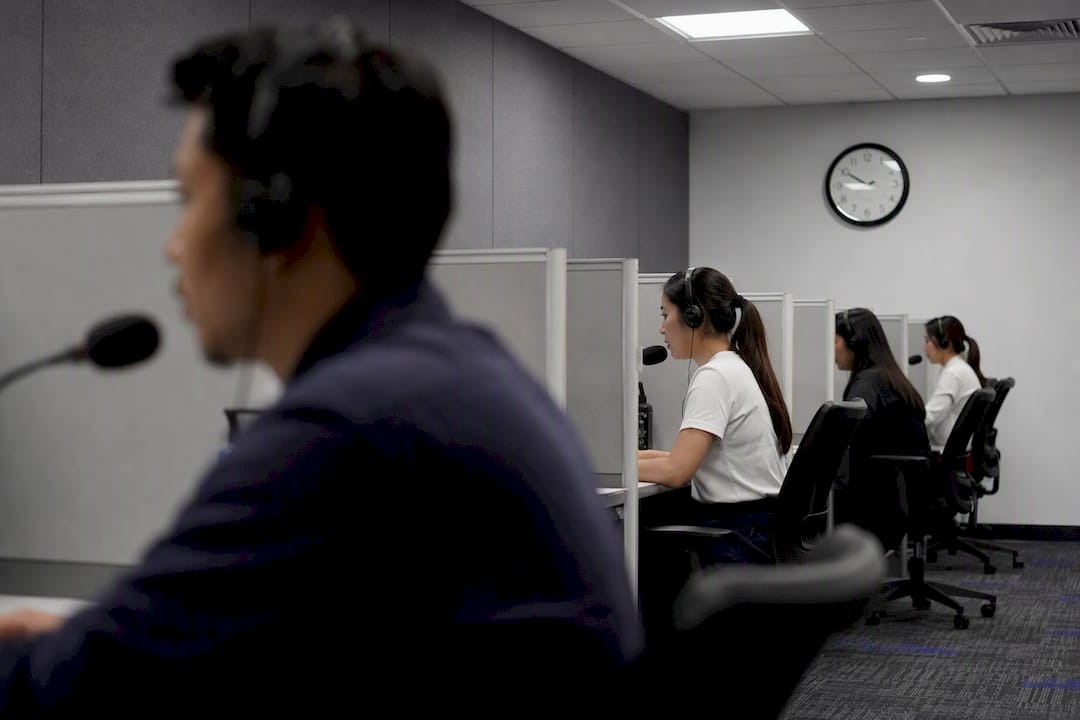
Speaking: PTE has you speak into a microphone in a shared test room, often alongside other candidates doing the same thing at once. IELTS puts you in a private room with a live examiner for a genuine back-and-forth conversation. Some test takers find the microphone format calms their nerves; others feel thrown off by ambient noise from neighboring test-takers.
Writing: PTE blends writing into integrated tasks like “summarize written text” and “write essay,” typed and scored automatically. IELTS Writing is handwritten (paper) or typed (computer-delivered) and evaluated by a trained human examiner, who can credit nuance a machine might miss.
Listening and reading: PTE weaves listening into speaking and writing tasks, so skills overlap constantly. IELTS keeps these sections more discrete, testing each skill in isolation. One structural detail matters more than people expect: PTE generally moves you forward through questions without letting you revisit earlier answers, while IELTS (especially computer-delivered) lets you flag and return to items within a section.
- Practicing timed typing and “describe image” drills sharpens PTE performance fast.
- Mock interviews with a study partner or tutor build the fluency IELTS speaking rewards.
Pro Tip: If you’re prone to overthinking spoken answers, time yourself doing PTE’s “repeat sentence” task on a phone recorder. It trains the split-second recall the machine is grading for.
Booking, Results, and What They Cost You in Time
Turnaround time often decides the test for people racing a deadline. PTE results generally land in 24 to 48 hours. IELTS can take a single day for computer-delivered sessions or stretch to 13 days for paper-based ones.
- IELTS offers a One Skill Retake option in some locations, letting you resit a single component instead of the full test.
- PTE requires a full retake if any section falls short, but its faster results mean less lost time between attempts.
- Book your test date against your visa lodgment or university offer deadline, not the other way around.
- If results are urgent, computer-delivered IELTS or PTE both beat paper-based IELTS by a wide margin.
How Do You Actually Decide?
Run through these questions in order:
- Does your university or visa pathway name a specific test? Some assessing authorities still require IELTS Academic only. Confirm this before you register for anything.
- How comfortable are you typing under time pressure versus speaking live? Be honest. This single factor predicts test-day performance more than raw English ability.
- How tight is your deadline? If you need results within days, PTE’s turnaround is hard to beat.
- What’s your retake budget, in both time and money? IELTS’s One Skill Retake can save you from resitting sections you already passed.
Watch for these tie-breakers: an institution or a professional licensing body that names IELTS Academic explicitly overrides personal preference every time. A visa lodgment window under two weeks usually tips the scale toward PTE. If you choose PTE, prioritize official Pearson practice tests and timed computer drills. If you choose IELTS, invest in live speaking practice and official IELTS materials over generic prep apps.
Why a Registered Adviser’s Input Matters Here
Ronit at Fewa Education & Migration, a MARA-registered practice, has guided students and skilled migrants through exactly this decision when test choice intersects with visa strategy.
Choosing between PTE and IELTS isn’t just about English ability. It’s about matching your test-day performance style to a format, then making sure that choice actually satisfies your visa subclass or university’s requirements before you pay for it.
If your deadline is tight or your assessing authority has unusual rules, talk to a registered adviser before you book.
What We See Candidates Actually Choose
Most candidates coming through Fewa lean toward PTE when timing is tight and toward IELTS when their target institution names it specifically. Many combine test coaching with visa timeline planning so both pieces move together.

Get Your Test Strategy and Visa Timeline Aligned
Choosing between PTE and IELTS is only half the equation. Getting the score, on time, in a format your visa subclass or university actually accepts, is the part that trips people up. Fewa runs dedicated PTE and IELTS coaching alongside visa advice, so your test prep and your application deadline are planned as one timeline instead of two separate problems.
A typical consultation walks you through which test suits your speaking and typing style, builds a study plan around your actual deadline, and checks your target score against the right English requirement for your visa or course. If you’re not sure where PTE’s updated scoring bands leave you, Fewa’s team can also walk you through recent PTE scoring changes and what they mean for your application. Book a free initial consultation through Fewa’s coaching page to get a test recommendation and a timeline that actually matches your deadline.
Where to Verify Official Requirements
- Department of Home Affairs English language guidance for current migration thresholds.
- IELTS Partners equivalency table for official score conversions.
- Pearson PTE for test format and result timing details.
- IDP’s PTE vs IELTS comparison for booking and format guidance.
- Fewa’s guide to newly accepted English tests for Australian visas for the latest accepted-test list.
Frequently Asked Questions
Is PTE easier than IELTS?
Neither test is objectively easier. PTE tends to suit fast typists comfortable with computer delivery, while IELTS tends to suit people who perform better in live conversation and traditional essay writing.
Which test is better for Australian visa applications?
Both PTE Academic and IELTS (Academic/General) meet Department of Home Affairs requirements at every English proficiency level, so the better choice depends on your comfort with each format and how quickly you need results.
Do all Australian universities accept PTE?
Most do, but some courses or professional accreditation bodies still specify IELTS Academic only. Confirm directly with your target institution before registering for a test.
How long are PTE and IELTS scores valid?
Both PTE Academic and IELTS scores are generally valid for two years for study and migration purposes, though individual institutions or visa subclasses may set their own validity windows.
Can I retake just one section if I fail?
IELTS offers a One Skill Retake option in select locations, letting you resit a single component. PTE currently requires a full retest if any section falls below your target score.
Sources
- English language – Department of Home Affairs (Australia)
- Ielts
- How are PTE Academic and IELTS Academic different? — Pearson PTE
- Comparing scores to IELTS — Cambridge English (PDF)
- IELTS vs PTE: a detailed comparison for test-takers — IDP