


Yes, you can change course or provider on a subclass 500 student visa, but two rules decide how easy that is: the ESOS National Code restricts transfers early in your principal course, and Home Affairs visa condition 8516 governs whether you need a whole new visa. Move within the same AQF level and it’s usually administrative. Drop to a lower AQF level, and the process gets considerably more serious.
TL;DR:
- Transferring to a different provider within six months of your principal course requires a release letter unless you qualify for an exception, and failure to obtain it breaches compliance rules.
- Moving between courses at the same AQF level usually only requires a provider update, but dropping to a lower level often triggers the need for a new visa due to condition 8516.
- Changing from a higher- to lower-level course without proper procedures likely means you must apply for a new student visa, especially if your CoE end date extends beyond your current visa’s expiry.
- Never enroll with a new provider before confirming your release and ensuring that PRISMS has been updated, as unapproved transitions can lead to visa breaches.
- Seeking advice from a registered migration agent before making course changes helps avoid mistakes that can result in visa refusals or losing compliance status.
Table of Contents
- Changing course at the same education provider
- Changing provider: the six-month rule and how transfers actually work
- When you must apply for a brand new student visa
- If your provider refuses to release you
- Step-by-step: changing course or provider without breaching your visa
- How Fewa Education & Migration helps students change course or provider
- What I’d tell a friend before they touch their enrolment
- How Fewa can help you change course with confidence
- Sources
- FAQ
Changing course at the same education provider
Switching subjects or majors within your current institution is the simplest version of a course change, and most students never touch their visa conditions to do it. If the new course sits at the same Australian Qualifications Framework (AQF) level and follows a similar field of study, your provider typically updates your Confirmation of Enrolment (CoE) and adjusts your PRISMS record without any visa application on your part.
The friction shows up at the edges. Moving from a Bachelor’s degree into a Diploma is a drop in AQF level, and that can trigger visa complications even though you never left the provider. Switching from, say, a business degree into a wildly unrelated trade qualification can raise similar flags, because your visa was granted on the basis of a specific principal course.
Before you sign anything new, take three practical steps:
- Pull out your written agreement with the provider and check its course change clause.
- Ask the international student office, in writing, to confirm whether the new CoE affects your visa conditions.
- Confirm the provider has actually updated PRISMS, not just their internal enrolment system.
Pro Tip: Get the provider’s confirmation of “no visa impact” in an email, not a verbal assurance at the front counter. If Home Affairs ever queries your enrolment history, that email is your evidence.
Changing provider: the six-month rule and how transfers actually work
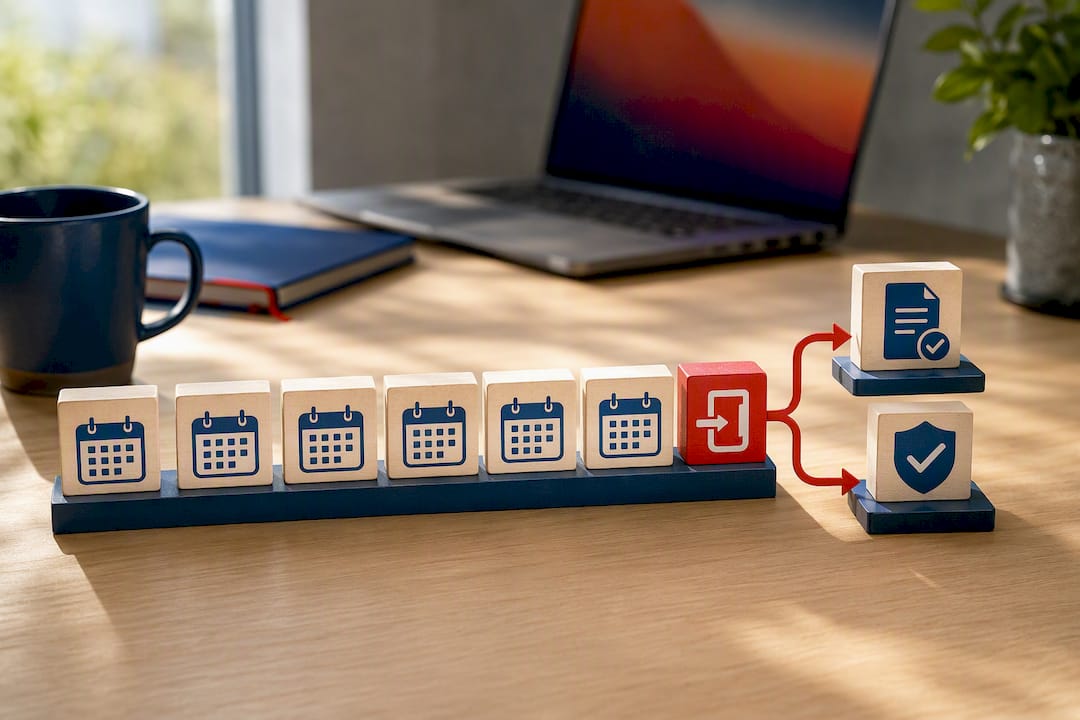
Standard 7 of the ESOS National Code restricts you from transferring to a different provider within the first six calendar months of your principal course, unless you get a release letter or fall under a specific exception. That six-month clock starts on your principal course start date, not your visa grant date or your arrival in Australia, and it’s a distinction that trips up a lot of students who assume the clock started earlier than it did.
Every registered provider must have a documented transfer policy, and under ASQA’s obligations for facilitating student transfers, they must assess your release request within a set timeframe, cannot charge you a fee for the release itself, and have to record the outcome in PRISMS. If your provider enrols a transfer student during someone else’s restricted period without an approved release on file, that’s a compliance breach on the provider’s end, not yours.
Grounds that typically justify an early release include:
- Your provider has ceased to be registered to teach international students, or the specific course has been suspended.
- You have documented compassionate or compelling circumstances, such as a serious illness, bereavement, or safety concern.
- The provider has breached its written agreement with you, or engaged in misconduct that affected your studies.
Outside those grounds, you generally wait out the initial restricted period before a different provider can lawfully take you on.
When you must apply for a brand new student visa
Your visa carries condition 8516, which requires you to keep meeting the criteria your visa was originally granted under. According to Home Affairs guidance on changed study situations, moving to a lower AQF level is one of the clearest triggers for needing a new visa application altogether, because your original visa was assessed against a higher-level course.
A few scenarios where you need to act fast:
- Your CoE end date shifts significantly, especially if it now extends well beyond your current visa’s expiry.
- You’ve completed your principal course and are moving into a genuinely different qualification.
- You’ve dropped from a Bachelor’s or Master’s into a Diploma or Certificate-level course.
One figure worth knowing: the six-month restricted period under Standard 7 is calculated in calendar months from your principal course start date, not study periods or semesters, so a mid-semester start date still counts from day one.
If you complete your course and plan to study something new, the general rule of thumb students rely on is acting within 28 days to avoid gaps in your visa compliance, though your specific circumstances should always be checked directly. The safest path is threefold: check your situation on Online, contact the Department of Home Affairs directly for anything involving condition 8516, and get advice from a MARA-registered migration agent if your case involves a lower AQF level or a complicated visa history.
If your provider refuses to release you
Start with the provider’s internal complaints and appeals process, every registered provider must have one under the National Code. Ask for the refusal reasons in writing; Standard 7 requires providers to give you this, and a verbal “no” with no documentation isn’t compliant.
If the internal appeal doesn’t resolve things, you have two escalation routes:
- Lodge a complaint with the Overseas Student Ombudsman, which reviews private provider decisions free of charge.
- If you’re at a public institution, check whether your state or territory ombudsman handles the complaint instead, since jurisdiction sometimes sits with the state.
Keep every email, every transfer request, every written response from the provider, and any evidence of compassionate or compelling circumstances you’re relying on. The Ombudsman consistently recommends building that paper trail and exhausting the internal appeal before escalating, because a clean record speeds up external review considerably.
Step-by-step: changing course or provider without breaching your visa
- Check your CoE and identify your principal course start date. This is your six-month countdown anchor, get it wrong and you’ll misjudge whether you’re still in the restricted period.
- Read your provider’s written agreement and transfer policy. If you need a new provider, secure an offer from them before formally requesting release; for guidance on the logistics involved, see regional relocation logistics in Australia, as most providers want to see it.
- Request release in writing if you’re inside six months. Keep every response. Once released, your new provider issues a fresh CoE and the old one gets closed out in PRISMS.
- Check whether the new course triggers a new visa. A same-level move usually doesn’t; a lower AQF level almost always does.
- Notify Home Affairs where required, and keep your OSHC, attendance, and academic progress records current throughout the transfer.
Pro Tip: Never enrol with a new provider before your release is confirmed and PRISMS is updated. Double enrolment is one of the fastest ways to create a compliance flag that has nothing to do with your actual intentions.
How Fewa Education & Migration helps students change course or provider
Working through condition 8516, release letters, and PRISMS timing on your own is doable, but the margin for error is thin. A registered migration consultancy can help students assess the visa risk of a course change before they act on it, not after a refusal lands.
That includes building a release and CoE checklist specific to your provider and course level, supporting appeals if a transfer request gets knocked back, and advising on new visa applications when a downgrade to a lower AQF level makes one necessary. If your situation involves an ambiguous case, sponsor complications, or a messy visa history, that’s exactly when a registered agent’s advice earns its keep.
What I’d tell a friend before they touch their enrolment
The mistake I see most is enrolling with a new provider before the release comes through, students assume the transfer is automatic once they’ve been “accepted” elsewhere. It isn’t. Others misjudge their principal course start date, or underestimate how long PRISMS updates actually take. Document every step, demand refusal reasons in writing, and talk to a MARA-registered agent before you touch a lower AQF level.
— Ronit
How Fewa can help you change course with confidence
If you’re weighing up a course change and the six-month rule, condition 8516, or a provider’s refusal has you second-guessing yourself, a registered migration consultancy can help turn that into a plan rather than a guessing game by working through your release letter, CoE timing, and PRISMS status with you, then advising you whether a new visa application is likely.
If a downgrade to a lower AQF level looks unavoidable, Fewa can help prepare the documentation a fresh application needs, including updated financial evidence and a revised statement of purpose. And if your current provider has already refused a release, expert advisers can help you build the paper trail an appeal needs before you approach the Ombudsman.
Book a free consultation through Fewa’s student visa service page and bring your CoE, written agreement, and any correspondence with your provider. That’s usually enough for a first, honest read on where you stand.
Sources
For the primary rules behind everything in this guide, go straight to the source:
- Obligations when facilitating student transfers | ASQA
- Your study situation has changed – Immigration and citizenship
- Factsheet: student transferring between education providers | Overseas Student Ombudsman
FAQ
Can I change courses on a student visa?
Yes, but if you’re within the first six calendar months of your principal course and want to switch providers, you generally need a release letter first under Standard 7 of the ESOS National Code.
Can you change your course of study without applying for a new visa?
Usually yes, if the new course is at the same AQF level as your current one; your provider just updates your CoE and PRISMS record.
Can I change my course from a Bachelor’s to a Diploma in Australia?
You can, but dropping to a lower AQF level often means condition 8516 no longer matches your circumstances, which typically means applying for a new student visa.
What happens if my provider refuses to release me?
Get the refusal reasons in writing, use the provider’s internal complaints process first, then escalate to the Overseas Student Ombudsman if it isn’t resolved.
Do I need to tell Home Affairs every time I change course?
Not for every same-level change, but you should notify Home Affairs whenever a change affects your visa conditions, and Fewa can help you work out which category your situation falls into.