


If you hold a Subclass 500 student visa, you can work up to 48 hours per fortnight while your course is in session, and unlimited hours during official course breaks, according to Department of Home Affairs. PhD candidates and master’s by research students are exempt from the cap entirely. A proposal to lift the limit to 60 hours has been costed, but it is not yet law, so the current rule still applies.
TL;DR:
- The current work cap for student visa holders is 48 hours per fortnight during study periods, with unlimited hours during official breaks, except for research students who are exempt.
- The rolling 14-day window means working 20 hours one week and 30 the next already breaches the limit, so tracking hours carefully with records is essential.
- Official course breaks are defined by academic calendars; unofficial leave or deferrals do not qualify for unlimited work hours, and students should confirm with their institution.
- The proposed increase to a 60-hour fortnightly cap is not yet law; the current 48-hour limit remains enforceable until legislation changes.
- Checking visa conditions regularly through VEVO and keeping documentation protects students from accidental breaches and workplace exploitation.
Table of Contents
- What Home Affairs says now about the 48-hour cap
- How a fortnight is actually calculated and how to track it
- Official course breaks and when unlimited hours apply
- Getting paid properly: TFN, tax and super basics
- Your workplace rights and what to do if something feels wrong
- The proposed 60-hour cap: what’s actually changed so far
- Checking your visa conditions and fixing a possible breach
- A migration adviser’s take on where students actually go wrong
- Getting professional help with your visa conditions
- Where to check the rules yourself
- Sources
- FAQ
What Home Affairs says now about the 48-hour cap
The 48-hour fortnightly cap is a visa condition, not a workplace policy, which means breaching it puts your visa at risk rather than just your job. According to Department of Home Affairs, the limit applies whenever your course is officially in session, and it resets only when your provider confirms a formal break. PhD students and those enrolled in a master’s by research are the sole exemptions, reflecting the fact that their study structure does not follow the same term based calendar as coursework degrees.
The cap exists because your student visa’s primary purpose is study, not employment. Work is meant to support you financially while you’re here, not become the main reason you’re in Australia. Home Affairs uses the fortnightly limit to keep that balance intact, and it’s one of the few visa conditions that gets checked retrospectively if something goes wrong, such as a cancelled enrolment or a workplace dispute that draws official attention.
Employers carry their own responsibilities when they hire someone on a student visa. Before rostering you on, a reasonable employer should:
- Confirm your visa condition code and current work entitlement through VEVO.
- Ask whether you’re in session or on an official break before setting your hours.
- Keep records that show they haven’t knowingly rostered you over the cap.
Employers who ignore these checks can face penalties themselves, so a workplace that resists confirming your conditions is a warning sign worth noting.
How a fortnight is actually calculated and how to track it
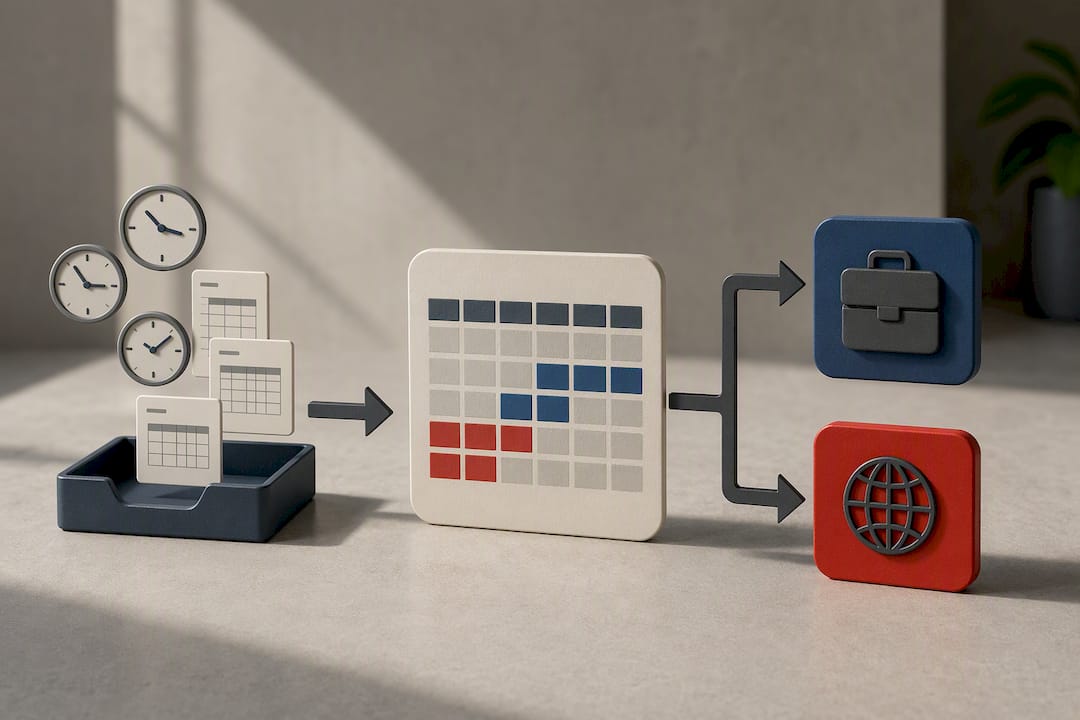
The cap doesn’t run on the calendar fortnights you might assume, like the first and third weeks of a month. It’s a rolling 14-day window, and any two consecutive weeks can be checked against the limit, according to Department of Home Affairs. Say you work 20 hours in week one and 30 in week two: that block already breaches the cap, even if your payslip fortnight hasn’t technically closed. Students who think in fixed pay cycles often get caught out here, especially when a roster spans two employers or shifts overlap a public holiday.
A few simple habits keep you on the right side of the line:
- Use a dedicated hours tracker such as the Record My Hours app to log every shift as you work it.
- Keep a basic spreadsheet with running 14-day totals if you prefer a manual method.
- Ask your employer for a printed or digital timesheet each pay period so you have a second record to cross check.
Pro Tip: Build in a small buffer, aim for 44 to 45 hours across any 14-day stretch rather than cutting it to exactly 48, so an unexpected extra shift doesn’t tip you over.
Official course breaks and when unlimited hours apply
Once your course moves into an official break, the 48-hour cap doesn’t apply and you can work as many hours as you like. The catch is that “official” is doing a lot of work in that sentence. A recognised break is one set out in your provider’s academic calendar, such as the mid-year semester break or the gap after final exams before the next term begins.
To confirm you’re genuinely in a break period:
- Check your institution’s published academic calendar for the exact start and end dates.
- Request written confirmation from your provider’s student services if the calendar is unclear or your enrolment has unusual timing.
- Keep that confirmation on file in case an employer or Home Affairs ever asks for evidence.
Unofficial leave doesn’t count. If you defer a subject, take personal leave, or your enrolment is paused for reasons outside an official term break, you’re generally still considered “in session” for visa purposes under Department of Home Affairs guidance. Assuming a personal gap in study automatically frees you from the cap is one of the more common and costly misunderstandings among student visa holders.
Getting paid properly: TFN, tax and super basics
Before you start any paid work in Australia, you need a Tax File Number. Without one, your employer is required to withhold tax at the highest rate, which means a much smaller pay packet than necessary. According to the Australian Taxation Office, students must obtain a TFN before starting paid work, and employers are obligated to withhold tax and report earnings once you’re on payroll.
Employers must withhold tax from every payment you receive, and cash-in-hand arrangements that skip this step are not a shortcut, they’re a legal risk for both of you. If a job offers to pay you entirely in cash with no payslip, treat that as a red flag rather than a convenience.
A few things worth locking in from day one:
- Apply for your TFN through the ATO as soon as you arrive, using the foreign passport holder application process.
- Check that your employer is paying superannuation on top of your wage, not out of it.
- Confirm your pay rate against the relevant award using Fair Work’s pay and conditions tools.
Your tax residency status can affect how much tax you pay overall, and it depends on your individual circumstances rather than your visa type alone, so it’s worth checking with the ATO if you’re unsure where you stand.
Your workplace rights and what to do if something feels wrong
Holding a student visa doesn’t reduce your workplace protections. According to the Fair Work Ombudsman, visa holders have the same entitlements as any other employee in Australia, including minimum pay rates, safe working conditions and the right to raise concerns without fear of retaliation.
Unfortunately, some employers rely on students not knowing this. Watch for these common signs of exploitation:
- Being paid well below the award rate for your role or industry.
- Pressure to work hours that push you over your visa cap, with the employer aware of it.
- Informal cash arrangements with no payslip, no super and no paper trail.
If any of this sounds familiar, the Fair Work Ombudsman offers confidential advice and a formal complaints process, and making a report will not lead to automatic visa cancellation, a point the Ombudsman and Home Affairs have both emphasised for visa holders raising genuine workplace concerns. You can read more in Fewa’s guide to work rights in Australia for international students, which walks through wage protections and complaint pathways in more detail. Reporting exploitation protects the next student who walks into that same job, and it protects you from a cycle of underpayment that only gets harder to unwind the longer it continues.
The proposed 60-hour cap: what’s actually changed so far
In 2025, the Parliamentary Budget Office costed a proposal to raise the fortnightly work cap for student visa holders from 48 to 60 hours during study periods, with a suggested commencement date of 1 July 2026. That would be an increase of 12 hours per fortnight if it goes ahead.
It’s worth being clear about what this document actually is. A PBO costing is a policy proposal, prepared to show what a change would cost the budget if adopted, not a piece of legislation and not a change to your visa conditions. For the cap to actually move to 60 hours, the proposal would need to pass through the usual legislative and regulatory process, and Home Affairs would need to update the standard visa conditions that apply to Subclass 500 holders.
Until that happens:
- Keep working to the current 48-hour fortnightly limit, regardless of what you’ve read about the proposal.
- Check your visa conditions periodically in case an update is officially confirmed.
- Treat any workplace pressure to “get ahead of the new rules” as a warning sign, since no employer can legally roster you past 48 hours based on a proposal alone.
Checking your visa conditions and fixing a possible breach
Your visa conditions are listed against your record, and the fastest way to confirm them is through VEVO, the government’s Visa Entitlement Verification Online system. Here’s how to check:
- Go to the VEVO check tool and enter your visa details exactly as they appear on your grant notice.
- Look for your condition code, most student visa holders will see a code referencing the 48-hour fortnightly work limit, and confirm whether any exemption applies to your course type.
- Save or screenshot the result for your own records, particularly if you’re about to start a new job.
Fewa’s guide on how to check visa status online in Australia walks through this process field by field if you want a slower, more detailed run through.
If you think you’ve already gone over the cap, don’t ignore it and hope it passes unnoticed. Pull together your timesheets or app records to see exactly what happened, contact your education provider to check your enrolment status, and speak with the Fair Work Ombudsman about your pay and hours. From there, a conversation with a registered migration adviser can help you understand what, if anything, needs to be reported and how to protect your visa going forward.
A migration adviser’s take on where students actually go wrong
Most of the breaches I see aren’t deliberate, they come from students who genuinely thought a semester break had started, or who didn’t realise two part-time jobs stack against the same 48-hour cap. That’s the pattern worth remembering: it’s rarely one bad decision, it’s a small miscalculation that compounds over a few weeks.
The students who avoid trouble are the ones who check their conditions early and ask questions before a problem develops, not after. If you’re unsure whether your enrolment status, your break dates or your current job add up correctly, get it confirmed rather than guessing. Migration advisers help students work through exactly these questions, from reading a VEVO result correctly to understanding what a provider’s break confirmation should look like.
— Ronit
Getting professional help with your visa conditions
Working out your exact entitlements shouldn’t rest on a forum post or a friend’s guess about the rules. Migration services can review your specific visa conditions, check your VEVO record with you and provide a clear answer about your current work limits, rather than a general summary that may not match your situation.
Our services relevant to this stage of your visa include:
- A VEVO check to confirm your exact condition code and work entitlement.
- Guidance on official breaks, exemptions and how they apply to your specific course.
- Full support if you’re applying for or extending a Student Visa, including help if a breach needs to be addressed.
If you want a straight answer about your own conditions rather than general rules that might not fit your case, book a free consultation through our student visa page and we’ll work through it with you.
Where to check the rules yourself
For readers who want to verify anything in this article directly, these are the primary sources worth bookmarking:
- Home Affairs visa conditions and VEVO, for your official condition code and current work entitlement.
- Fair Work Ombudsman, for workplace rights, pay rates and complaint pathways.
- ATO guidance for students, for TFN applications and tax obligations.
- The PBO proposal document, labelled clearly as a costed proposal, not current law.
Employers checking their own obligations before hiring a student visa holder can also refer to this right to work check guide from The Recruitment Alternative.
This article is general information, not a substitute for advice from a qualified lawyer. Consult a qualified legal professional about your own circumstances before acting on anything here.
Sources
- Check visa details and conditions — Department of Home Affairs
- Student visa work hours – increase — Parliamentary Budget Office
- Visa holders and migrants — Fair Work Ombudsman
- Studying in Australia — Australian Taxation Office
FAQ
Can a student work 40 hours a week in Australia?
Not consistently. The cap applies per fortnight, not per week, so you could work a balanced number of hours one week if you balance it with fewer hours the next, as long as the rolling 14-day total stays at or under 48 hours according to Department of Home Affairs.
Can I work more than 20 hours as an international student?
Yes, the old 20-hour weekly limit no longer applies. The current condition is 48 hours per fortnight while your course is in session, confirmed by Department of Home Affairs, which works out to roughly the same average but gives you more flexibility across a two-week period.
Is it possible to work 60 hours per fortnight on a student visa?
Not yet. A 60-hour cap has been proposed and costed by the Parliamentary Budget Office for possible commencement from 1 July 2026, but it remains a proposal, not a legislated visa condition, so the 48-hour limit still applies now.
What are the new rules for student visa in Australia in 2026?
As of 2026, the fortnightly work cap for Subclass 500 holders remains 48 hours during study periods, with unlimited hours during official breaks and exemptions for PhD and master’s by research students, according to Department of Home Affairs. A proposed increase to 60 hours has been costed but has not been legislated.
Will reporting an employer for underpayment affect my visa?
No, making a genuine complaint about pay or conditions will not result in automatic visa cancellation. The Fair Work Ombudsman confirms that visa holders have the same workplace protections as other employees and can seek confidential help without risking their visa status.