


A visa application charge is generally not refunded in Australia, even when your application is refused or withdrawn. Refunds only apply in a narrow set of circumstances set out in the Migration Regulations and departmental instruments, and you need to check the Department of Home Affairs refund page, Form 1424, and the relevant legislation before you assume you qualify.
TL;DR:
- Refunds are only available if you never lodged the application, paid erroneously, or the applicant died before a decision; a refusal alone does not qualify.
- Completing Form 1424 with accurate payer information and supporting evidence is crucial to avoid delays and ensure eligibility for a refund.
- Attach specific documents such as death certificates, bank statements, or duplicate payment receipts, ensuring they are complete and properly certified.
- Recent exemptions, like for the Business Innovation and Investment Program, are time-limited and only apply to specific subclasses and withdrawal scenarios.
- Processing times vary, and refunds are generally paid to the original account; if rejected, a formal internal review is the appropriate next step.
Table of Contents
- Who can get a refund: the legal grounds and common scenarios
- How to request a refund: completing Form 1424 step by step
- What supporting documents to attach and where claims go wrong
- Recent pathways and time limited exceptions like BIIP
- Processing times and how a successful refund is paid
- If Home Affairs refuses your refund: internal review and next steps
- Why you should never reverse or charge back a visa payment
- When it’s worth getting professional help with your claim
- How Fewa can help with your visa charge refund claim
- Sources
- FAQ
Who can get a refund: the legal grounds and common scenarios
Refund eligibility comes from specific legislation, not general fairness. The Migration Regulations 1994, particularly regulations 2.12F to 2.12H, together with the Migration (Refund of Visa Application Charge) Instrument (LIN 21/007) 2021, set out exactly when the Department can return a visa application charge. Outside these defined triggers, there is no discretion to refund a fee simply because you changed your mind or your circumstances shifted.
The scenarios that typically qualify include:
- You paid the charge but never actually lodged an application.
- The Department made an administrative error, such as processing a duplicate payment.
- The visa applicant died before a decision was made.
- A specific instrument or regulation names your subclass and situation as eligible, such as certain COVID-19 travel restriction cases.
A visa refusal on its own is not a refund trigger. The Department is clear that the charge pays for the assessment of your application, not for a successful outcome, so a refusal or a straightforward withdrawal after lodgement usually leaves the fee with Home Affairs. If your application was refused and you are wondering what comes next, our guide on what to do after a student visa refusal covers the practical steps, separate from any refund question.
How to request a refund: completing Form 1424 step by step
If your situation matches one of the eligible grounds, the formal request runs through Form 1424, the Department’s dedicated refund request form. The payer of the original charge, not necessarily the visa applicant, must complete and sign it.
- Identify the correct payer, since Form 1424 requires the person who actually paid the charge to complete specific questions and physically sign the declaration.
- State the exact reason the refund is legally or administratively available, referencing the regulation or circumstance that applies to your case.
- Attach the supporting evidence the form calls for, such as a certified death certificate, a bank statement, or proof of duplicate payment.
- Submit the completed form through the channel the Department specifies for your case, which may include uploading it in ImmiAccount or posting a signed copy where required.
- Keep a clear, dated record of events, including when the payment was made and when the triggering circumstance occurred.
Vague or incomplete answers on the reason for refund are one of the most common causes of delay, so be specific rather than general.
Pro Tip: Gather your bank statements and payer identification before you start the form, since Home Affairs will ask for them if the original payment method can’t receive the refund.
What supporting documents to attach and where claims go wrong
The evidence you attach depends on your refund ground, and Form 1424 lists the documents expected for each scenario. Getting this part wrong is the most frequent reason a straightforward claim stalls.
- For a death of applicant or payer claim, attach a certified death certificate and, where relevant, probate or letters of administration.
- For payment evidence, provide the original counter receipt, a bank statement showing internet, BPAY or card payments, or agent payment details if a migration agent paid on your behalf.
- Avoid unsigned declarations, incomplete bank account details, missing payer authorisation, or receipt copies that don’t clearly show the payer’s name.
Proving the link between the payer and the applicant is often the practical bottleneck. A correctly completed payer section with certified documents attached the first time speeds up assessment considerably, and it avoids the back-and-forth that comes from the Department requesting the same evidence twice.
Recent pathways and time limited exceptions like BIIP
Some refund pathways exist only for a defined window, and the Business Innovation and Investment Program (BIIP) closure is the clearest current example. From 31 July 2024, eligible BIIP applicants for subclasses including 188 and 132 who withdraw their application can request a refund through the BIIP closure and refunds page.
- Withdraw the application first through ImmiAccount, then use the Manage Payments function to request the BIIP refund.
- Only specific streams are included in this pathway, so check the Department’s list against your exact subclass before assuming you qualify.
- Don’t assume a BIIP-style refund applies to other visa subclasses. Confirm the subclass and date limits on the official page rather than relying on general advice.
Processing times and how a successful refund is paid
There is no fixed processing timeframe for refund requests. The Department assesses each claim individually, and how long it takes depends on the complexity of your evidence and the specific ground you’re relying on.
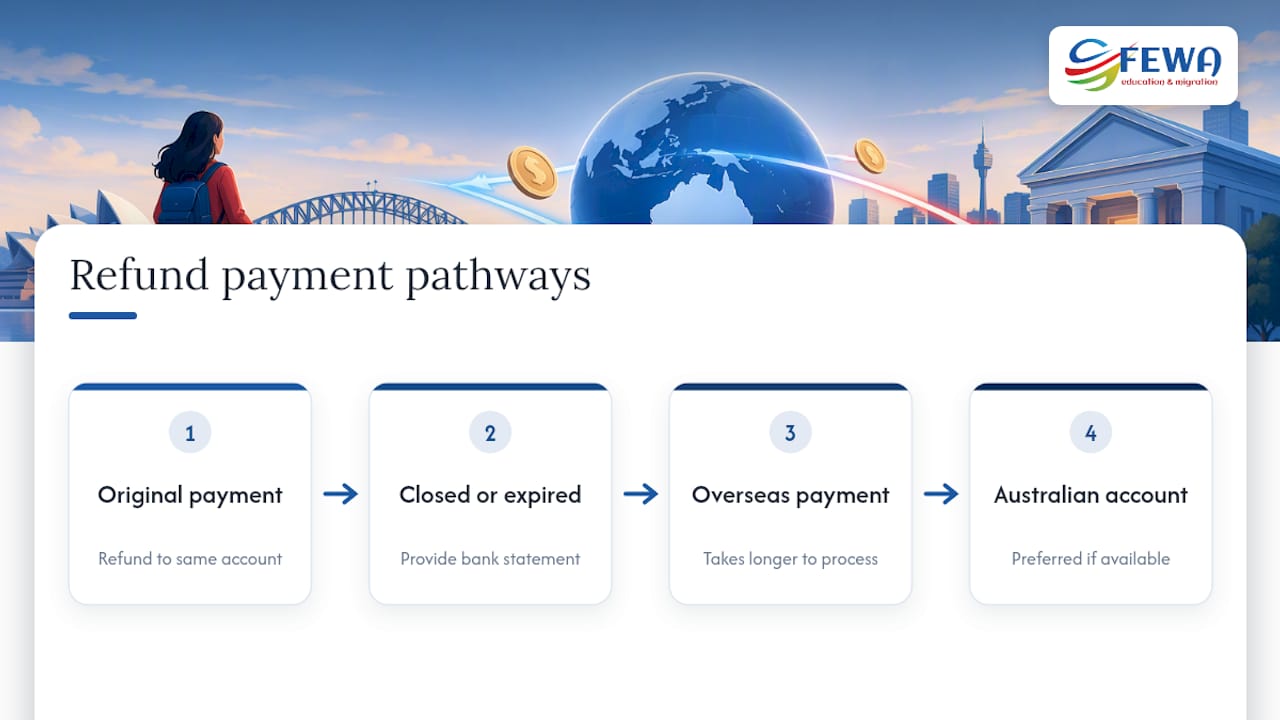
When a refund is approved, it’s normally paid back to the same account or card used for the original payment. If that account is closed or the card has expired, you will need to provide a bank statement for an alternative account so the Department can redirect the payment. Overseas payments can be refunded too, but expect this to take longer, and Home Affairs generally prefers an Australian bank account where one is available.
If Home Affairs refuses your refund: internal review and next steps
A refused refund request is a different decision from a visa refusal, and it comes with its own review path rather than a merits review. If your Form 1424 claim is knocked back, you can lodge a refund decision internal review request online.
- Use the details in your refusal notice to identify exactly what the Department relied on when it refused your claim.
- Address the specific gap the Department identified, whether that’s missing evidence or an unclear payer link, rather than repeating your original submission.
- Skip general enquiries during this process. They don’t add anything and can slow down an already individually assessed request.
Treat this as a targeted resubmission focused on new or clarified evidence, not a second attempt at the same argument.
Why you should never reverse or charge back a visa payment
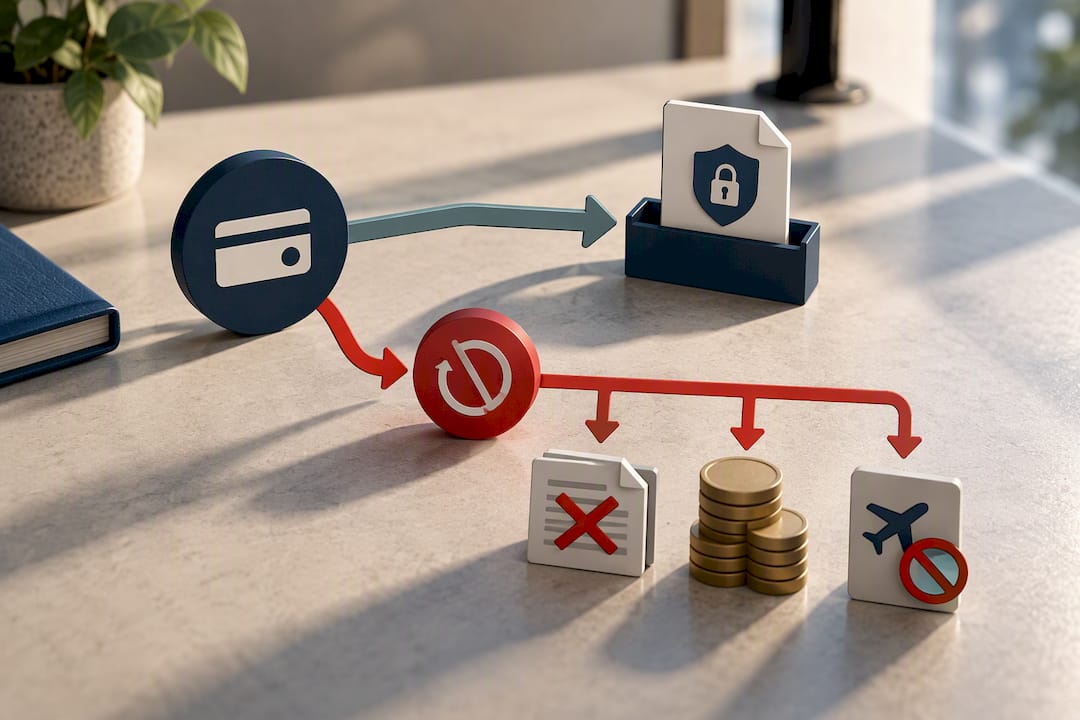
Never ask your bank to reverse or charge back a visa application payment, even if you believe you’re owed a refund. The Department warns that doing this can invalidate your application, create a debt to the Commonwealth, and affect your ability to get another visa later. Use Form 1424 and the Department’s formal refund process instead, no matter how frustrating the wait feels.
When it’s worth getting professional help with your claim
Most refund claims are procedural once you know the right form and the right evidence, but some situations get complicated fast. Sorting probate documents for a deceased applicant, tracking down payment records when a migration agent paid on your behalf, or building a focused internal-review submission after a refusal all benefit from someone who has done it before.
Experienced migration consultancies can help clients gather the exact evidence required by Home Affairs rather than leaving it to guesswork on a form.
— Ronit
How Fewa can help with your visa charge refund claim
If you’re not sure your situation meets the refund criteria, or you’re already assembling documents for Form 1424, we can help you get it right the first time. Our team works through the payer evidence, probate paperwork, or agent payment records your claim needs, and we prepare internal-review submissions that speak directly to what the Department flagged in its refusal notice.
Some consultancies offer paid services and often start engagements with an initial consultation so clients understand what is involved before commitment. If your refund question sits alongside a broader visa matter, whether that’s a student visa, a partner visa, or another category, our visa services page is the place to start.
This article is general information, not a substitute for advice from a qualified financial advisor. Consult a qualified financial professional about your own circumstances before acting on anything here.
FAQ
Will my visa application fee be refunded?
Usually not. The Department of Home Affairs treats the charge as payment for assessing your application, so refusal or withdrawal doesn’t automatically qualify you. Refunds are limited to specific circumstances set out in the Migration Regulations and related instruments.
Can I get a refund for my visa application?
You can, but only if your situation matches one of the defined grounds, such as an administrative error, an application that was never actually lodged, or the death of the applicant. If you qualify, you’ll need to complete Form 1424 and attach the supporting evidence it requires.
Can I get a refund for my visa if it’s refused?
Generally no. A visa refusal is a decision on the merits of your application, while a refund depends on separate legal grounds under the Migration Regulations, so the two aren’t linked. If you were refused, our guide on student visa refusal next steps explains what to do about the visa outcome itself.
How long does it take to refund visa fees?
There’s no fixed processing timeframe, as the Department assesses each refund request individually. Refunds are normally paid back into the original payment account, and providing complete evidence upfront tends to reduce delays.