

Only Bridging visa B (BVB) lets you leave and return to Australia while your substantive visa is being processed. Bridging visa A (BVA) does not give you that right. If you depart on a BVA, you generally cannot use it to come back, and the travel period attached to a BVB is set by the Department of Home Affairs and strictly limited.
TL;DR:
- To apply for a BVB, you must hold a bridging visa and be physically in Australia; submit Form 1006 through ImmiAccount and pay the charge.
- The Department sets each travel window based on your reason for leaving and your application’s progress; open ended trips are harder to justify.
- Return before the travel window expires, since arriving even one day late can risk refusal; leave at least a week of buffer for delays.
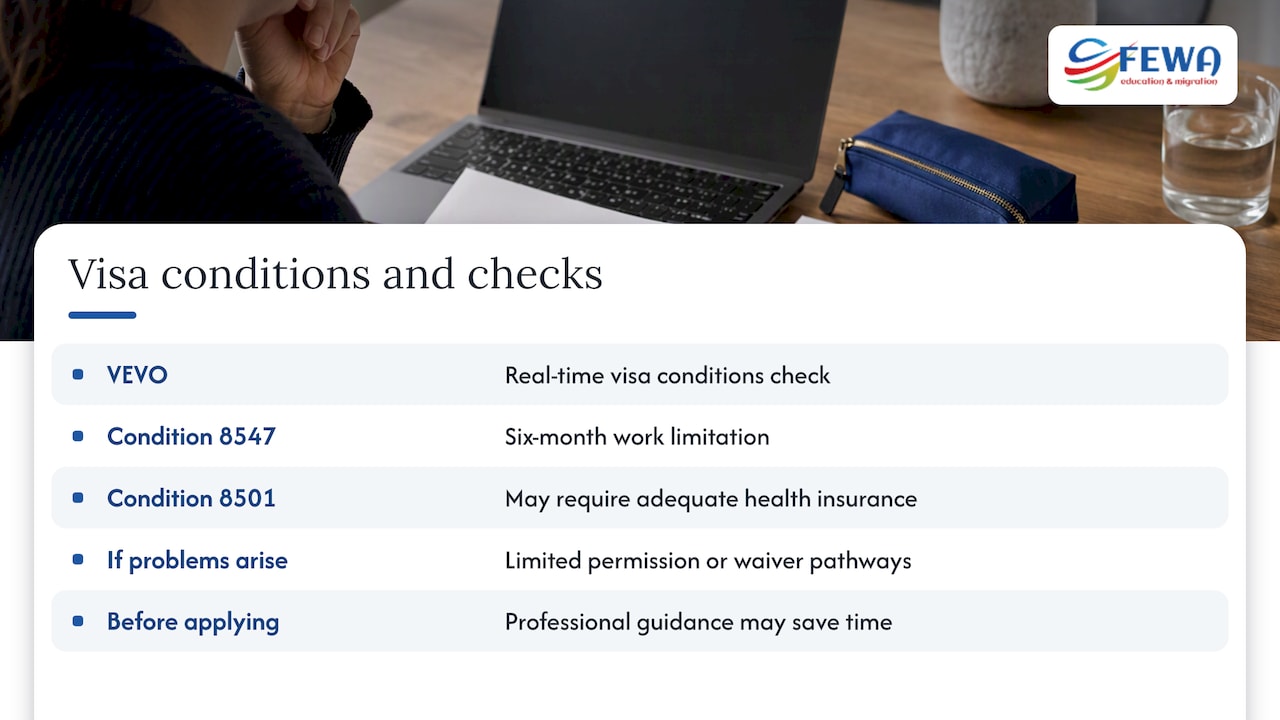
- Check VEVO before travel: condition 8547 can impose a work limit of six months, while condition 8501 may require adequate health insurance during your stay.
Table of Contents
- BVA vs BVB at a glance
- What a bridging visa A actually lets you do
- What a bridging visa B gives you that BVA doesn’t
- Applying for a BVB: eligibility, forms and fees
- Checking your conditions: VEVO, work rights and health cover
- Your pre-departure checklist for travelling on a BVB
- Leaving on a BVA only: what tends to happen next
- What advisers see go wrong, and why it’s avoidable
- How Fewa helps you apply for a BVB with confidence
- FAQ
- Sources
BVA vs BVB at a glance
The two bridging visas look similar on paper but behave very differently once you book a flight. Here’s what actually separates them:
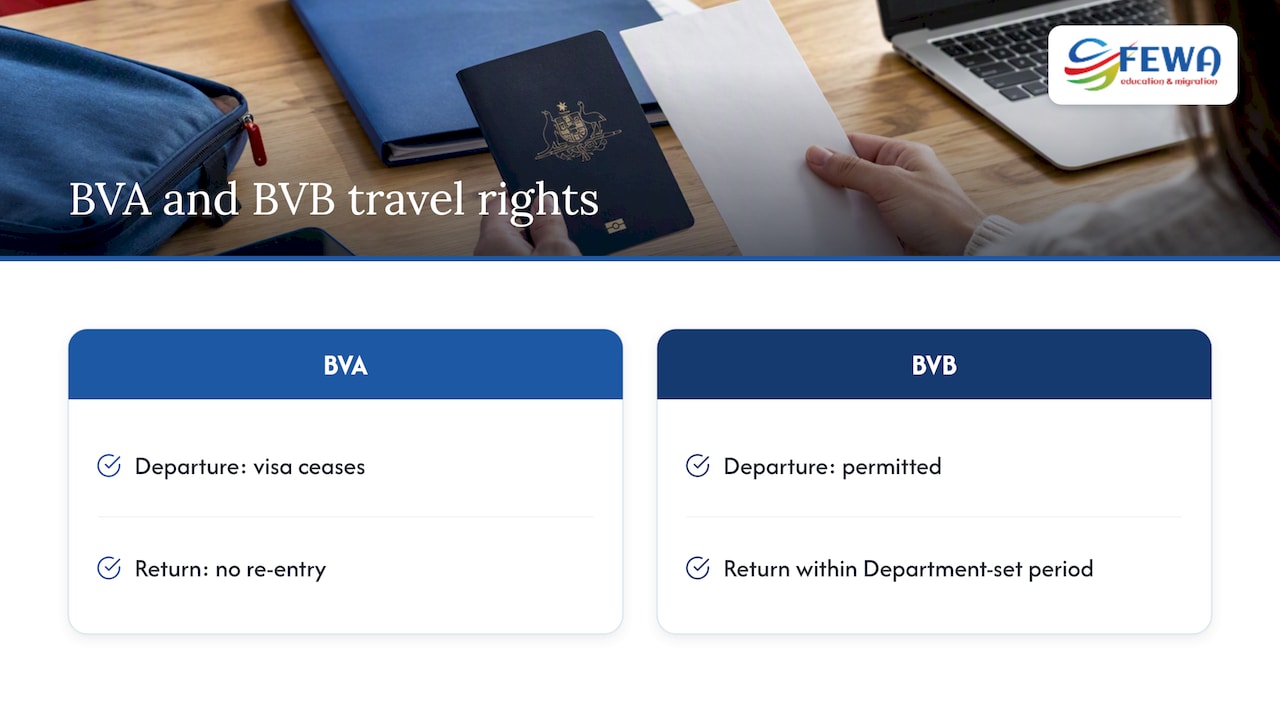
- Travel rights: BVB includes a travel facility with a set return window; BVA has no travel facility at all.
- How you get one: A BVA is usually granted automatically when you lodge a substantive visa application onshore; a BVB requires a separate application, evidence and a payment.
- Who needs a BVB: Anyone on a bridging visa who has a genuine reason to leave Australia, such as a family emergency or work commitment, while waiting on a decision.
- Cost and process: BVA typically arises without extra paperwork, while BVB requires Form 1006 and a visa application charge paid through ImmiAccount before lodgement.
- Consequence of leaving on a BVA: Your BVA usually ceases the moment you depart, which can leave you needing to apply for an entirely new visa from overseas before you can return.
Knowing which one you hold, and what it actually lets you do, matters more than most people realise until they’re standing at an airport counter.
What a bridging visa A actually lets you do
A BVA is typically granted when you lodge a substantive visa application while already holding a valid visa in Australia. It keeps you lawfully in the country while the Department works through your case, which for many applicants is its only job. It does not, however, give you any right to leave and come back.
According to the Department’s travel guidance, a BVA ceases if you depart Australia, and you will not be able to use it to re-enter. Picture someone midway through a partner visa assessment who flies home for a parent’s illness, believing their bridging visa still covers them. On return, they may find they need to apply for a fresh visa from overseas, which can add months to a process that was already underway.
What a bridging visa B gives you that BVA doesn’t
A BVB exists specifically to solve the problem a BVA creates. It grants permission to leave Australia and return within a travel period that the Department sets for your individual case, rather than leaving you locked onshore until a decision is made.
The Department weighs your stated reason for travel against how far along your substantive application is when it decides how generous that window will be, as outlined on the travel on a bridging visa page. A short family visit close to a likely decision date tends to get a straightforward window; an open-ended trip with no clear end point is a harder case to argue.
The window is not a formality. Come back a day after it closes and you risk being refused re-entry on that BVB, even if your substantive application is still sitting in the queue. Treat the travel period as a hard deadline, not a guideline, and build in a buffer for flight delays or unexpected changes to your plans.
Applying for a BVB: eligibility, forms and fees
Getting a BVB approved before you travel means working through a short but strict process:
- Confirm eligibility: you must already hold a bridging visa, either BVA or BVB, and be physically in Australia when you apply.
- Complete Form 1006, the Department’s dedicated application for a Bridging visa B, setting out your substantial reasons for leaving and returning.
- Lodge through ImmiAccount or attach the form as directed, following the online bridging visa application process.
- Pay the visa application charge in ImmiAccount before your application is considered valid, checking the current visa pricing page first since charges change.
- Attach supporting evidence, including your reason for travel, a return itinerary and any documents showing compelling circumstances, and tell the Department promptly if anything changes.
Checking your conditions: VEVO, work rights and health cover
Before you rely on either bridging visa, confirm exactly what conditions sit on yours. VEVO (Visa Entitlement Verification Online) lets you check your current visa conditions and entitlements in real time, which matters because conditions differ from one bridging visa holder to the next.
Two conditions come up often. Condition 8547 is a six-month work limitation that can restrict how much you’re allowed to work while your substantive visa is pending. Condition 8501 can require adequate health insurance for the duration of your stay. If either condition is causing problems, the Department outlines pathways to request permissions or waivers in limited circumstances, and this is a point where getting professional guidance before you apply tends to save time rather than cost it.
Your pre-departure checklist for travelling on a BVB
Before you book anything, work through this list:
- Confirm your BVB has actually been granted and that the travel period is clearly recorded, not just applied for.
- Check your passport is valid well beyond your planned return date.
- Make sure your return flight lands inside the travel window, not on its last possible day.
- Recheck VEVO to confirm your current conditions, including any work or health insurance requirements.
- Carry printed or digital copies of your BVB grant notice and ImmiAccount payment receipt.
Pro Tip: Build in at least a week’s buffer before your travel period ends, so a delayed flight or a mix-up at check-in doesn’t cost you your right to come home.
Leaving on a BVA only: what tends to happen next
If you leave Australia holding only a BVA, that bridging visa typically ceases the moment you depart, as the Department’s travel guidance makes clear. You won’t be able to use it to walk back through customs, no matter how close your substantive application was to a decision.
In practice, this usually means applying for an appropriate visa from overseas before you can return, which can add real delay to a case that was otherwise progressing. If your departure wasn’t planned around this rule, the most useful thing you can do is get migration advice straight away, before you book anything else, so you understand exactly what re-entry option is actually available to you.
What advisers see go wrong, and why it’s avoidable
The mistakes we see most often aren’t complicated: someone books a flight assuming their BVA covers them, or applies for a BVB without a clear enough reason for the travel window they’re asking for. Both are avoidable with the right preparation.
When we work through a BVB application with a client, the job is making sure the evidence, from travel reason to return itinerary, actually supports the window being requested, rather than leaving it to chance.
— Ronit
How Fewa helps you apply for a BVB with confidence
If you’re weighing up bridging visa options in Australia and need to travel while your substantive visa is pending, we offer assistance with parts that trip people up most: checking your VEVO conditions, preparing Form 1006 with a travel reason that holds up, and lodging through ImmiAccount correctly the first time.
Our support can include reviewing your current bridging visa conditions, helping with the preparation and lodging of your BVB application, and advising on timing so your travel window aligns well with your substantive visa’s likely progress.
We work across student, partner and skilled migration cases that commonly involve bridging visas. Visit our visa services page to book a consultation before you book a flight.
FAQ
What is the processing time for a bridging visa B in Australia in 2026?
Processing times for a BVB vary depending on your individual case and how clearly your evidence supports your travel reason. The Department does not publish a fixed turnaround, so it’s worth lodging well ahead of your planned departure and checking the current visa pricing page for the latest fee before you apply.
What is a BVA visa in Australia?
A Bridging visa A (BVA) is a temporary visa that lets you stay in Australia lawfully while a substantive visa application is being processed. It does not include a travel facility, so it does not let you leave and return, as confirmed on the Department’s travel while your visa is being processed page.
What happens if you leave Australia on BVA?
Leaving Australia while holding only a BVA typically causes that bridging visa to cease, meaning you cannot use it to re-enter. You would generally need to apply for an appropriate visa from overseas, which can add delay to your case.
Can I apply for BVB while on BVA?
Yes, you can apply for a BVB while holding a BVA, provided you’re in Australia at the time of application. You’ll need to complete Form 1006, show substantial reasons for travelling and pay the visa application charge in ImmiAccount before it’s considered valid.
Sources
- Form 1006 — Application for a Bridging visa B (Department of Home Affairs)
- Submit your bridging visa application online — Department of Home Affairs
- Current visa pricing — Department of Home Affairs