

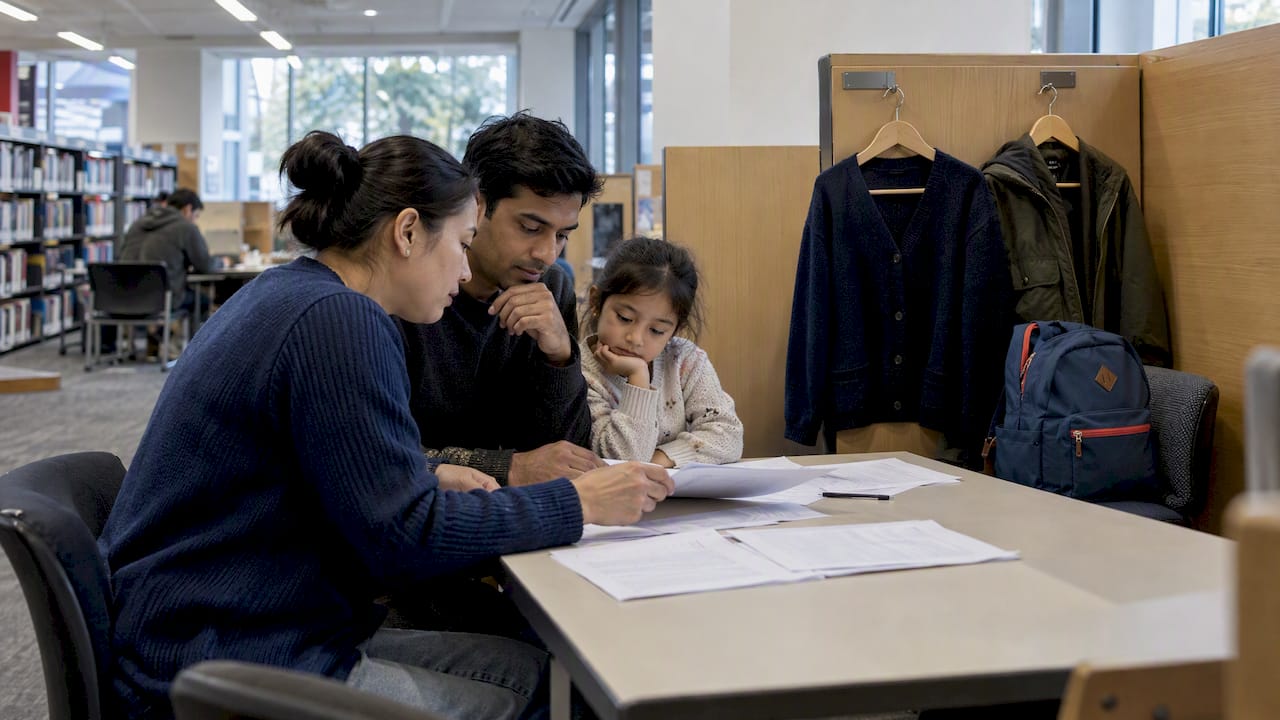
From 2 October 2026, most international students can no longer include a partner or dependent children on a new Subclass 500 student visa application. A small number of exemptions still allow dependants, including PhD and postgraduate research students, DFAT or Defence sponsored students, foreign government scholarship recipients, and eligible Pacific or ASEAN students. Check your exemption status before enrolling or paying any deposit.
TL;DR:
- Lodge eligible dependants with your initial application; later additions are generally barred, and everyone named must usually be in the same location at lodgement.
- An application without a valid exemption may be treated as invalid, so confirm the exact exemption in writing and attach supporting evidence before lodgement.
- Show funds for travel, course fees, and 12 months of living costs for you and each dependant, and arrange active health cover before or at lodgement.
- For children aged 5 to 17, provide Australian school enrollment confirmation; if one parent is not traveling or custody applies, include Form 1229 parental consent.
- Applications in Priority 1 generally begin assessment within 1 to 4 weeks, compared with 5 to 8 weeks for Priority 2 and 9 to 12 weeks for Priority 3.
Table of Contents
- Who counts as a dependant and when they must be included
- The October 2026 changes and who is exempt
- How to include dependants the right way
- Financial capacity and the evidence you’ll need
- OSHC, school enrolment and parental consent for children
- What to expect for processing times
- Passing the genuine student and genuine dependent tests
- If your application is refused, here’s what to do next
- How Fewa supports families through the dependant process
- A practical note on where applications go wrong
- Book a consultation for your student dependent visa
- FAQ
- Sources
Who counts as a dependant and when they must be included
A dependant on a student visa application generally means your partner (married or de facto) and any dependent child. A dependent child is usually unmarried and under 18, though some older children who are full-time students and financially reliant on you may still qualify under the Subclass 500 eligibility rules.
Timing matters as much as eligibility. Under current settings, dependants generally need to be included when you first lodge your application. Once your student visa is granted, you usually cannot add a partner or child later; this is often referred to as the “no subsequent entrants” rule, and it applies unless a specific legal exemption covers your situation.
Combined applications also carry a location condition: everyone named on the application, you and your dependants, typically needs to be in the same place when you lodge. A few points worth keeping straight:
- Dependent children are generally defined as unmarried and under 18, with limited exceptions for older dependent students.
- A partner must meet the definition of spouse or de facto partner under the Migration Regulations.
- Dependants added after grant are not permitted outside narrow exemptions.
- All family members named on a combined application usually need to be in the same location at lodgement.
The October 2026 changes and who is exempt
The policy shift that took effect on 2 October 2026 removed the general right for student visa applicants to bring family members with them, a change confirmed by Study Australia. For the vast majority of new applicants, a Subclass 500 application can no longer include a partner or children.
A defined set of exemptions remains in place:
- Students undertaking a PhD or other postgraduate research degree.
- Students sponsored by the Department of Foreign Affairs and Trade or the Department of Defence.
- Recipients of an eligible foreign government scholarship.
- Eligible Pacific or ASEAN students covered under specific bilateral arrangements.
A PhD candidate starting a four-year research degree would typically qualify to include a spouse and children at lodgement. A student enrolling in a standard bachelor’s degree, by contrast, would not, regardless of how long the course runs.
How to include dependants the right way
If you fall within an exemption, the sequence you follow at lodgement determines whether your application is even valid. Get this wrong and you risk more than delay.
- Confirm in writing which exemption applies and gather the supporting evidence (scholarship letter, DFAT or Defence sponsorship confirmation, or enrolment confirmation for a research degree).
- Check whether you need to apply from offshore; most combined applications under an exemption are expected to be lodged outside Australia, with onshore lodgement permitted only in narrow circumstances tied to your specific exemption.
- Confirm every family member included on the application is physically in the same location as you when you lodge.
- Prepare individual document sets for each dependant: passport and identity documents, evidence of the relationship (marriage certificate, birth certificate), Overseas Student Health Cover, and school enrolment evidence where a child will study in Australia.
- Reference the specific exemption clause in your application and attach the corroborating letter or evidence directly to that claim.
Pro Tip: Lodge dependant documents in the same bundle as your own evidence, clearly labelled by name and relationship, so a case officer can verify eligibility without requesting clarification that could cost you weeks.
The Department of Home Affairs factsheet on the 2026 changes warns that an application lodged without meeting an exemption can be treated as invalid, which may affect your ability to apply for a further visa if your current visa has already expired.
Financial capacity and the evidence you’ll need
Home Affairs expects you to show enough money to cover travel, course fees and 12 months of living costs for yourself and every dependant you include, with figures that have been increased in recent departmental updates. Our guide to meeting the financial capacity test breaks down exactly what counts as acceptable proof.
The Department periodically revises the minimum financial capacity figure for student visas, and the most recent increase was formally announced, so always check the current figure before budgeting.
Evidence that tends to satisfy a case officer includes:
- Recent personal or sponsor bank statements covering at least the required period.
- A signed sponsor letter where a parent or relative is funding your studies.
- Payslips or an employer letter confirming income, where relevant.
- A scholarship or sponsorship letter, for exempt categories relying on that funding.
For school-aged dependants, you’ll also need to show funds covering school fees where enrolment is confirmed, and Overseas Student Health Cover must be arranged and active for every dependant before or at the time of lodgement.
OSHC, school enrolment and parental consent for children
Dependent children bring their own paperwork trail, separate from the financial and relationship evidence. The Department’s web evidentiary tool sets out exactly what’s expected for health cover, schooling and consent.
- Arrange Overseas Student Health Cover for every dependant, with cover starting from the date you intend to arrive or as instructed by the Department.
- For children aged 5 to 17, supply an enrolment letter or confirmation of enrolment from an Australian school, along with evidence of any school fees paid.
- Where one parent or guardian is not travelling, or where custody arrangements are relevant, complete Form 1229 to provide parental consent for the child’s travel and stay in Australia.
Missing or incomplete consent documentation is one of the more common reasons a combined application stalls at assessment, so it pays to have this sorted before you lodge rather than after a case officer asks for it.
What to expect for processing times
Student visa applications are processed in priority bands under Ministerial Direction 115, and where your application sits affects how quickly it’s picked up for assessment.
- Priority 1 applications typically commence within 1 to 4 weeks of lodgement.
- Priority 2 applications generally commence within 5 to 8 weeks.
- Priority 3 applications generally commence within 9 to 12 weeks, though actual outcomes vary by individual circumstances.
A complete, correctly lodged application with every dependant’s documents in order tends to move through these bands faster than one that triggers a request for more information. Our detailed breakdown of typical student visa processing times covers what pushes an application into a slower queue.
Passing the genuine student and genuine dependent tests
Even when you meet an exemption and have your documents in order, a case officer still needs to be satisfied you’re a genuine student with a genuine need to bring your family. The genuine student requirement guidance sets out the factors examined.
- Your immigration history, including any prior visa refusals or breaches.
- Economic, family and social ties that connect you to your home country.
- The value and relevance of the course to your study and career plans.
- Whether your dependants’ circumstances genuinely support travelling with you rather than remaining at home.
A Statement of Purpose that directly addresses these points, rather than listing qualifications alone, carries weight with decision makers. Our guide to matching the five genuine student factors in your SOP walks through how to structure that evidence.
Pro Tip: Name your dependants’ specific circumstances in your SOP (schooling plans, your spouse’s role, your return intentions) rather than leaving the officer to infer them from documents alone.
If your application is refused, here’s what to do next
A refusal letter sets out the specific grounds relied on, and reading it carefully is the first step before deciding what to change.
- Identify exactly which criterion was not met: genuine student, genuine dependent, financial capacity or an exemption that wasn’t clearly evidenced.
- Check whether a merits review through the Administrative Appeals Tribunal is available to you and note the strict timeframe for lodging it.
- Strengthen a reapplication with new or clarified evidence that directly answers the refusal reasons, rather than resubmitting the same documents.
Our guide on what to do after a student visa refusal covers how to approach a review or a fresh application with the right evidence attached.
How Fewa supports families through the dependant process
We provide consultancy services and conduct dependant eligibility checks for students planning to bring family to Australia. We assist in confirming exemption status, preparing documents for dependants, and managing lodgement to help ensure applications are correctly filed the first time.
We also follow up on requests for further information and monitor processing milestones to support the application process between submission and decision. For families navigating the 2026 changes, practical, document-focused support can help applications proceed more smoothly.
A practical note on where applications go wrong
The most common mistake we see isn’t a missing form, it’s applicants assuming an exemption applies to them without checking the precise wording first. A four-step checklist keeps you on track: confirm your exemption in writing, gather funds and OSHC evidence for every dependant, prepare school enrolment and parental consent documents early, and get MARA-registered advice before you lodge if your situation involves any ambiguity.
— Ronit
Book a consultation for your student dependent visa
We handle eligibility checks, document preparation and lodgement support for families navigating the 2026 dependant rules, backed by our MARA registration. If you think you qualify for an exemption, or you want certainty before you enrol or book flights, we can confirm your position before you commit to anything.
- Visit our student dependent visa page to see how we support combined applications.
- Browse our full visa services if you need broader guidance on your student visa pathway.
Book a free consultation with our team to check your exemption status and get your document checklist sorted before you lodge.
FAQ
Is a spouse allowed on a student visa in Australia?
From 2 October 2026, a spouse can only be included on a new Subclass 500 application if you fall within a recognised exemption, such as undertaking a PhD or holding DFAT, Defence or foreign government scholarship sponsorship. Outside these categories, most students cannot include a partner on a new application.
Can I work while on a student visa in Australia?
Student visa holders can generally work under the conditions attached to their Subclass 500 visa, and dependants included on the visa typically have their own work rights specified in their visa grant. The exact hours and conditions depend on your individual visa grant letter, so always check what’s listed against your own visa.
How long does it take to get an Australian student visa?
Processing speed depends on which priority band your application falls into under Ministerial Direction 115, with Priority 1 applications generally commencing within 1 to 4 weeks and lower priority bands taking longer. A complete application with all dependant documents correctly attached tends to move faster than one that prompts a request for more information.
Can I reapply for a visa after being refused?
Yes, reapplying is possible, and in some cases a merits review through the Administrative Appeals Tribunal may also be available depending on the refusal grounds. Any reapplication should directly address the specific reasons given in the refusal letter rather than resubmitting the same evidence.
What should I check before including dependants on my application?
Confirm whether you fall within one of the current exemptions, such as PhD study, DFAT or Defence sponsorship, a foreign government scholarship, or eligible Pacific or ASEAN student status, before you enrol or make travel plans. The Department of Home Affairs advises checking eligibility first, since an invalid application can affect your ability to apply for a further visa.