


A no further stay condition generally stops you lodging another substantive visa while you’re in Australia, but it isn’t absolute. The Department of Home Affairs can waive it on narrow compassionate and compelling grounds. If this applies to you, check your visa grant notice or VEVO today and lodge a waiver request well before your visa expires.
TL;DR:
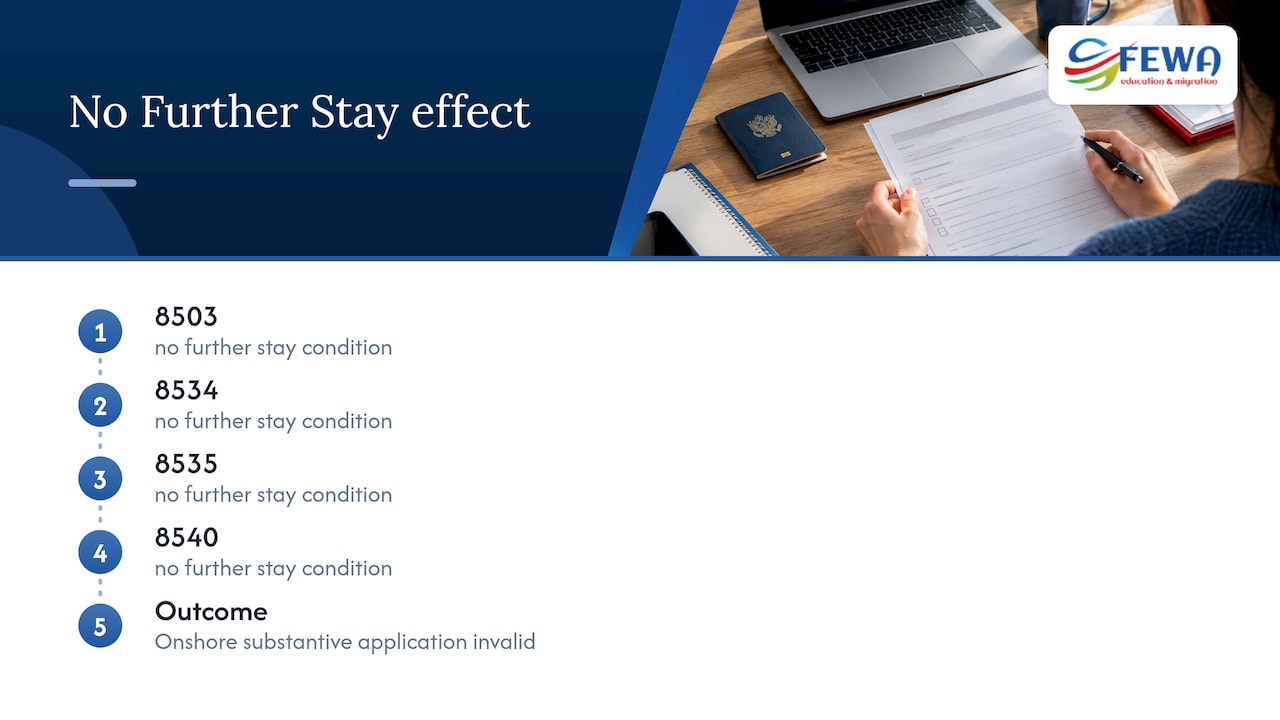
- Conditions 8503, 8534, 8535, and 8540 generally bar most onshore substantive visa applications; lodging without a waiver makes the application invalid and creates no bridging visa.
- A waiver requires a significant, unforeseen change after grant, beyond your control; wanting to stay longer or following an onshore plan does not qualify.
- Processing can take up to 28 days, and a pending request gives no bridging visa; contact the Department urgently if your current visa nears expiry.
- Check VEVO and your grant notice, use the online waiver form or Form 1447 when required, and lodge before your current visa expires.
- Each affected visa holder needs a separate request; provide certified evidence and a dated timeline explaining when circumstances changed and why they were beyond your control.
Table of Contents
- What the no further stay condition is and where it comes from
- When a waiver can be granted: the Department’s ‘compelling and compassionate’ test
- Step by step: how to prepare and lodge a No Further Stay waiver request
- What evidence matters and how to structure a persuasive submission
- Processing times, visa status risks and urgent next steps if your visa is expiring
- Practitioner perspective: when professional help changes the outcome
- How we can help with your waiver request and next visa step
- FAQ
- Sources
- Official forms, Home Affairs pages and legislation to act on
What the no further stay condition is and where it comes from
“No further stay” refers to a family of conditions, most commonly 8503, 8534, 8535 and 8540, attached to certain temporary visas at grant. Once one of these sits on your visa, you’re generally barred from applying for most other substantive visas while you remain in Australia. The restriction comes from the Migration Regulations, which set out where and when a visa application can validly be made and what happens when it can’t.
If you lodge another onshore substantive visa application without first securing a waiver, the Department treats it as invalid. That means no visa is granted, no bridging visa arises from it, and you’ve used time and effort on an application that was never going to proceed. Knowing which condition you hold, and reading it correctly from your grant notice, is the first thing to get right before doing anything else.
When a waiver can be granted: the Department’s ‘compelling and compassionate’ test
A waiver isn’t a formality. The Migration Regulations and Department guidance set a genuinely narrow threshold: something significant must have changed since your visa was granted, that change must be beyond your control, and the consequences of not waiving the condition must be compelling or compassionate.
Circumstances that have historically supported a waiver request include:
- A serious illness or medical emergency affecting you or an immediate family member that arose after your visa was granted.
- A sudden family crisis, such as a death or breakdown that leaves you with new caring responsibilities.
- New dependent circumstances, like the birth of a child or a partner’s medical condition, that weren’t present when your visa was issued.
Wanting to stay longer, or always having intended to apply for another visa onshore, doesn’t meet the test. The Department is specifically looking for an unforeseen event, not a change of plan.
Step by step: how to prepare and lodge a No Further Stay waiver request
Treat this as a checklist, not a one-off form fill. Each step affects whether your request is processed quickly or kicked back for missing information.
- Confirm your condition and expiry date. Check VEVO and your grant notice to identify the exact condition number and the date your current visa ceases.
- Choose the right form. Most applicants use the online No Further Stay waiver request form, though some cases require the downloadable Form 1447.
- Attach certified identity and supporting documents. Include a passport copy, evidence of the change in circumstances, and a clear explanation of why it happened after your visa was granted.
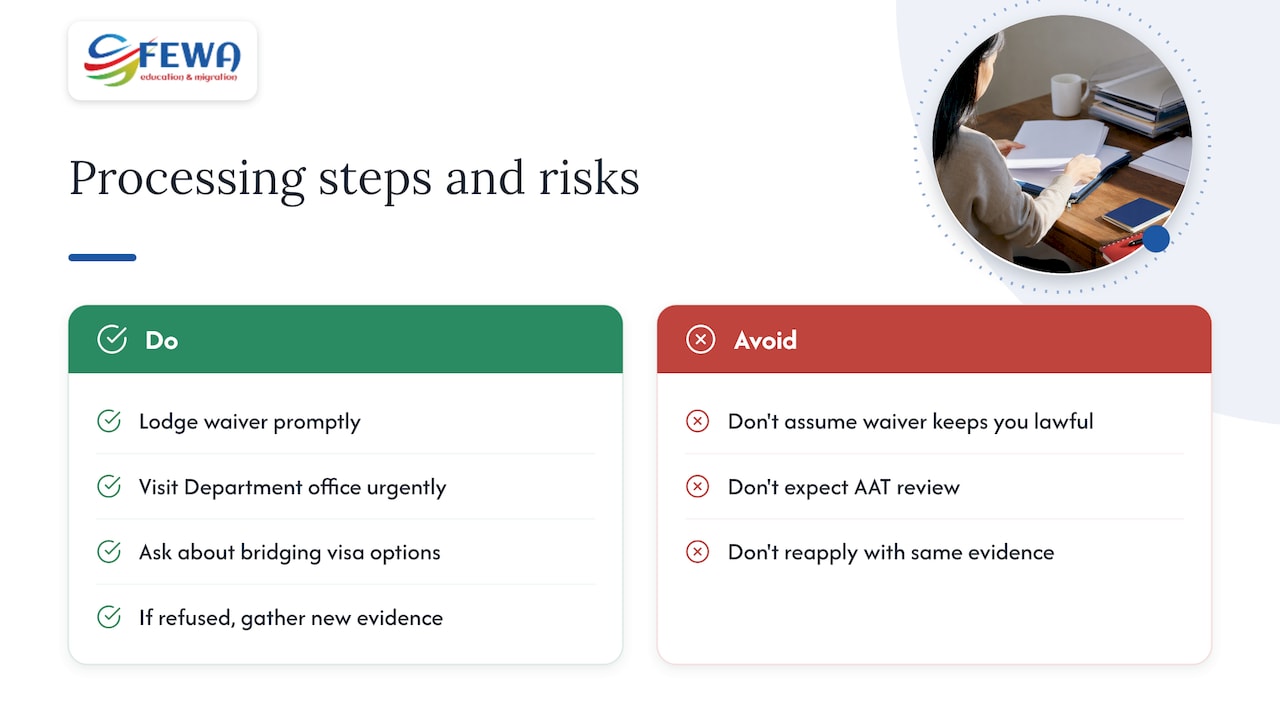
- Lodge while your visa is still valid. Submit before expiry and respond to any Department request for further information as quickly as you can.
- Submit separately for each affected person. Every visa holder with a no further stay condition, including family members, needs their own request.
Pro Tip: Lodge your waiver request the moment a qualifying event occurs, rather than waiting until your visa is close to expiry, since the Department’s processing clock starts from the day it receives a complete submission.
What evidence matters and how to structure a persuasive submission
A strong waiver request tells a clear, chronological story: what your situation looked like at grant, what changed, and why that change was beyond your control. Evidence should support each link in that chain, not just assert the outcome.
- Build a timeline that shows the date of grant, the triggering event, and the date you became aware of it.
- Prioritise certified medical reports, hospital records, police reports, relationship evidence or employer letters depending on what caused the change.
- Provide certified translations for any document not in English, and keep the overall submission concise rather than exhaustive.
- Name the visa subclass you intend to apply for if the waiver is approved, so the Department understands the practical outcome you’re seeking.
Pro Tip: A one-page chronology attached to the front of your evidence bundle often does more to persuade a case officer than another folder of unsorted documents.
Processing times, visa status risks and urgent next steps if your visa is expiring
Form 1447 and Department guidance indicate waiver requests typically take up to 28 days to process, though this can extend if the Department requests further information or a medical examination.
Lodging a waiver request does not automatically keep you lawful. If your current visa expires before a decision is made, you can become unlawful, so visiting a Department office urgently is essential if that risk is close. Because a waiver request isn’t itself a bridging visa application, it’s worth discussing bridging visa options and other immediate permissions with the Department at the same time you lodge. Review rights are also limited: a decision not to waive condition 8503, 8534, 8535 or 8540 can’t be reviewed by the Administrative Appeals Tribunal, and a fresh request after refusal needs genuinely new and substantially different evidence, not a restated version of the first.
Practitioner perspective: when professional help changes the outcome
Most waiver requests we see succeed or fail on the quality of the causal story, not the paperwork itself. A MARA-registered adviser earns their fee when a case involves medical complexity, overlapping family applications, or a visa that’s close to expiry, because those are exactly the situations where a rushed or poorly sequenced submission costs you the outcome. Good advisers don’t just lodge forms. They collate evidence, build the timeline that links the event to the consequence, and prepare the next visa application so there’s no gap once the waiver is granted.
— Ronit
How we can help with your waiver request and next visa step
We prepare and lodge No Further Stay waiver requests, from evidence collation through to the drafting of a compelling, properly sequenced submission. Where a waiver is granted, we also handle the follow-on application, whether that’s a partner visa, a skilled visa or another pathway suited to your circumstances.
- Initial consultation to assess whether your circumstances meet the compelling and compassionate test.
- Help gathering certified medical, employment or relationship evidence before your case officer asks for it.
- Lodgment of the waiver request and, where approved, the subsequent substantive visa application.
Before you book, gather your grant notice, passport, and any documents showing what’s changed since your visa was issued. If your visa is close to expiry, treat this as urgent and start a conversation through our visa services page today.
This article is general information, not a substitute for advice from a qualified lawyer. Consult a qualified legal professional about your own circumstances before acting on anything here.
FAQ
What are the new immigration rules for Australia in 2026?
There’s no single changed rule specific to no further stay conditions. The governing framework remains the Migration Regulations, and waiver eligibility still turns on the compelling and compassionate test described in Department guidance.
How do I avoid having my visa application rejected?
Applications are most often refused or deemed invalid when conditions like no further stay aren’t identified and addressed before lodging a new visa. Checking your current conditions on VEVO, applying for the correct visa subclass and submitting complete, certified evidence are the main ways to avoid this outcome.
How long does it take to process a No Further Stay waiver request?
Department guidance in Form 1447 indicates processing typically takes up to 28 days, though it can take longer if the Department requests further information or a medical examination. Lodging early and responding quickly to any request helps avoid delays.
How long can you stay outside Australia on a visa?
This depends entirely on your visa subclass and its specific travel conditions or validity period, which are listed on your grant notice and in VEVO. There’s no single rule that applies across all visa types, so check your own grant conditions before travelling.
Sources
Official forms, Home Affairs pages and legislation to act on
Start with the No Further Stay waiver request form or Form 1447 if a PDF submission is required. The Department’s waiver guidance page explains eligibility and related permissions, and the Migration Regulations set out the legal basis for the condition. If a qualifying event involves employment loss, this guide to unfair dismissal checks may help you document that part of your timeline.