


Yes, you can sponsor a relative to visit Australia if you’re an Australian citizen, permanent resident, or eligible New Zealand citizen. This falls under the Visitor visa (Subclass 600) Sponsored Family stream. Start by completing Form 1149 and attaching it in ImmiAccount before or alongside your relative’s Form 1415 application. Sponsoring means accepting real financial responsibility, including a possible security bond, so understand the commitment before you sign.
TL;DR:
- Sponsoring a relative requires completing and attaching Form 1149 before or alongside the visitor’s Form 1415, with sponsorship costs potentially including a security bond of AUD 5,000 to 15,000.
- You must be at least 18, settled in Australia, and related within specific categories such as parent, child, spouse, or sibling, and prior breaches may lead to a five-year sponsorship ban.
- The correct submission sequence is completing and uploading Form 1149 first, then the relative lodging Form 1415 referencing your sponsorship, with consistency and genuine relationship evidence critical for approval.
- Sponsoring guarantees financial responsibility for maintenance, but does not ensure visa approval, which depends on the visitor’s genuine temporary intent and passing health and character checks.
- Most application delays stem from poor sequencing, weak relationship evidence, or mismatched documents, so understanding sponsorship obligations beforehand reduces errors and improves approval chances.
Table of Contents
- What to Gather Before You Start Your Family Sponsored Visitor Visa Application
- Who Can Sponsor a Relative on a Family Visitor Visa?
- How Do You Lodge Form 1149 and Form 1415 Correctly?
- What Financial Risk Are You Accepting as a Sponsor?
- What Rules Apply to Your Visitor Once They’re in Australia?
- Where Do Sponsors Usually Go Wrong?
- A Local Take on What Actually Gets These Applications Approved
- How Fewa Can Help You Sponsor a Family Member
- Sources
What to Gather Before You Start Your Family Sponsored Visitor Visa Application
Getting organized before you touch ImmiAccount saves you from the back and forth that stalls most applications. Assemble these items first:
- Proof of your sponsor status: Australian citizenship or permanent residency evidence, or eligible New Zealand citizenship documentation
- Photo ID (passport or driver’s license) for yourself
- Relationship evidence: birth certificates, marriage certificates, family photos, call logs, or message histories showing an ongoing connection
- Accommodation details for your relative’s stay, including address and length
- Travel dates and passport details for each visitor you plan to sponsor
You’ll need an ImmiAccount to upload Form 1149 and attach it to your relative’s visitor application. Create one through the Department’s website if you don’t already have one, since every subsequent step runs through that same account.
Pro Tip: Scan your relationship evidence into clearly labeled files (e.g., “Birth_Certificate_Mother_2024.pdf”) before you start the ImmiAccount upload. Case officers move faster through applications where the file names make sense at a glance.
Who Can Sponsor a Relative on a Family Visitor Visa?
Not everyone qualifies as a sponsor, and the rules are stricter than most people expect. You must be at least 18 years old and settled in Australia, meaning you hold Australian citizenship, permanent residency, or eligible New Zealand citizenship, according to the Sponsored Family stream guidance.
The relationship also has to fit within an approved category. Eligible relatives typically include:
- Parents and step-parents
- Children and step-children
- Spouses or de facto partners
- Siblings and step-siblings
- Grandparents and grandchildren
- Aunts, uncles, nieces, and nephews
A small number of exceptions exist for certain officials, but those cases are rare. What doesn’t qualify: fiancés, some in-law relationships, and friends, no matter how close the bond. If you’ve sponsored someone before and they breached their visa conditions, you could face a five-year bar from sponsoring anyone else. That penalty applies even if the breach wasn’t something you could control, which is why vetting your relative’s intentions matters as much as vetting your own paperwork.
One more restriction catches people off guard: you generally can’t run simultaneous sponsorships for multiple visitors under certain circumstances tied to your financial capacity or history. If you’re planning to bring over more than one relative, check your standing with a migration professional before lodging multiple Form 1149s at once.
How Do You Lodge Form 1149 and Form 1415 Correctly?
Sequencing is where most sponsors trip up. Here’s the order that avoids delays:
- Complete Form 1149 first. This is your sponsorship undertaking, and it captures both your details and your relative’s information.
- Upload it to ImmiAccount. Scan the signed form and attach it inside your ImmiAccount before your relative submits anything.
- Have your relative lodge Form 1415. This is the actual visitor visa application, and it must reference your sponsorship.
- Attach the sponsorship to each application. If you’re sponsoring more than one relative, Form 1149 needs to be linked to every individual Form 1415 submitted.
- Monitor progress through ImmiAccount and VEVO. ImmiAccount tracks lodgement status, while VEVO lets you verify visa entitlements once a decision is made.
The Department generally expects supporting evidence that proves a genuine relationship and a genuine intention to visit temporarily, not documents that simply check a box. Case officers weigh consistency across everything submitted, so a birth certificate that doesn’t match the spelling on a passport can trigger a request for more information.
Sponsorship does not guarantee a visa grant. Even with a flawless Form 1149, your relative still has to pass the genuine temporary entrant assessment on their own merits. Processing times vary depending on the visitor’s country of origin and individual circumstances, so build in a buffer rather than booking flights around a guessed decision date.
What Financial Risk Are You Accepting as a Sponsor?
Signing Form 1149 isn’t a formality. You’re accepting a binding legal undertaking that covers your relative’s maintenance, accommodation, and, if things go wrong, removal costs from Australia. The Department treats this as a real liability owed to the Commonwealth, not a soft promise.
In practice, an authorized officer has discretion to request a security bond, commonly between AUD $5,000 and AUD $15,000 per person. Whether that bond gets requested depends on the officer’s assessment of risk, including your relative’s visa history and country of origin. It’s not automatic, but you should budget as though it might happen.
If your relative doesn’t comply with their visa conditions, overstays, or works illegally, consequences cascade quickly:
- Forfeiture of any bond you’ve paid
- Recovery action against you for removal or other costs
- A five-year bar preventing you from sponsoring anyone else
Before you commit, ask yourself honestly whether you have the financial cushion to absorb a worst case. A relative visiting for six months on good behavior costs you nothing beyond the application. A relative who overstays or breaches conditions can cost you thousands and lock you out of sponsoring family again for half a decade.
Pro Tip: Set aside the security bond amount mentally, even if it’s never requested. Sponsors who treat the bond as a real possibility rather than a rare edge case tend to make more cautious, better documented sponsorship decisions.
What Rules Apply to Your Visitor Once They’re in Australia?
Your relative still has to clear the same genuine visitor test as any other Subclass 600 applicant, plus standard health and character checks. Sponsorship strengthens the application; it doesn’t replace that individual assessment.
Once granted, the visa typically carries these conditions:
- Condition 8101: no work of any kind while in Australia
- Condition 8503: possible “no further stay” restriction, meaning no extensions or changes to a different visa onshore
- Study limited to a maximum of three months
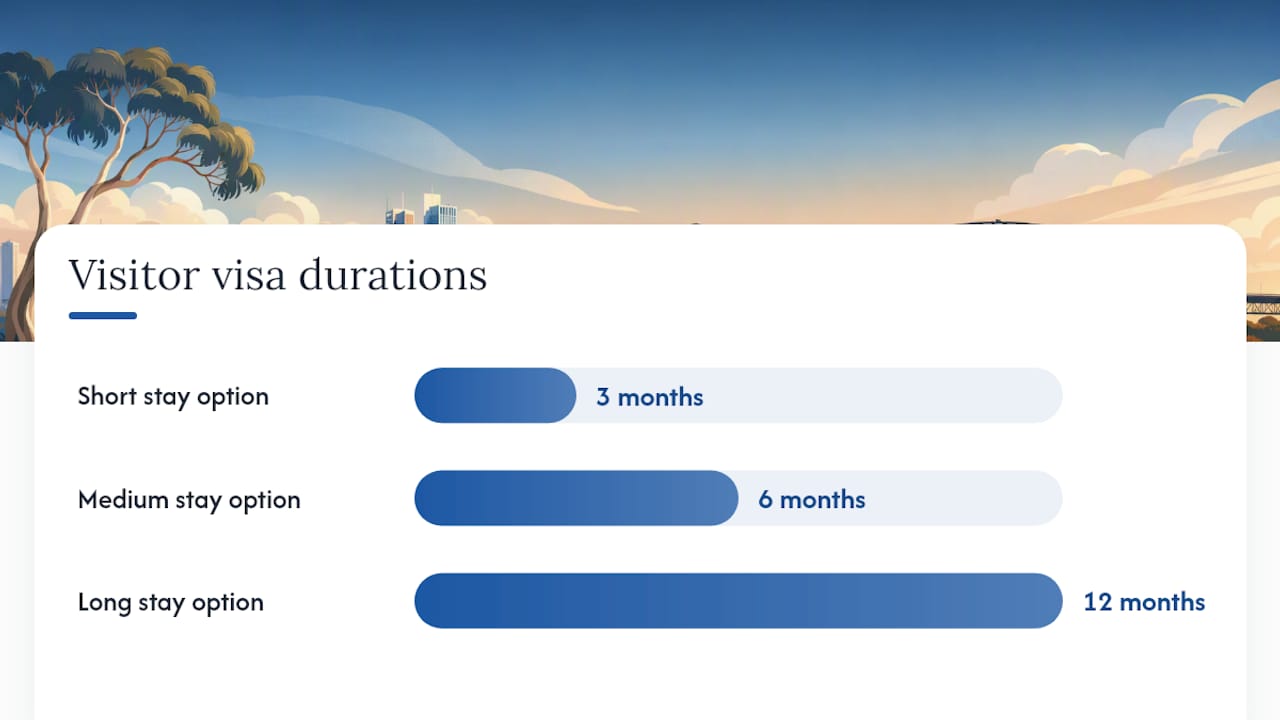
- Stay duration set at 3, 6, or 12 months, depending on the assessment
Higher-risk factors, such as a visitor’s country having elevated overstay rates or a prior history of visa non-compliance, can push a case officer toward stricter conditions like 8503. That’s the Department managing its own exposure the same way you’re managing yours as sponsor.
If the visitor is a child under 18, expect an additional layer: Form 1229 or equivalent custody evidence showing parental consent for international travel. This exists to prevent unauthorized child movement across borders, and skipping it is one of the fastest ways to stall an otherwise solid application.
Where Do Sponsors Usually Go Wrong?
Most refusals and delays trace back to a handful of repeat mistakes, and nearly all of them are avoidable with better sequencing and evidence.
- The visitor lodges Form 1415 before Form 1149 is uploaded. This breaks the required order and often triggers a request for clarification.
- Relationship evidence is thin or inconsistent. A single photo isn’t proof of an ongoing family bond; case officers want a pattern.
- Documents don’t match across applications. Spelling variations, mismatched dates, or inconsistent addresses raise flags fast.
- Fraudulent or altered material gets submitted, even unintentionally through a poorly translated document. This can trigger integrity checks that end in refusal and a sponsorship bar.
If the Department requests a security bond, respond promptly and provide exactly what’s asked, no more and no less. If your case involves a higher-risk nationality, a prior visa breach, or genuinely complex family circumstances, that’s the point to bring in a registered migration agent rather than troubleshooting alone.
A Local Take on What Actually Gets These Applications Approved
Working through migration cases day after day teaches you something the government forms don’t spell out: the applications that sail through aren’t necessarily the ones with the most paperwork. They’re the ones where the sponsor understood the undertaking before signing it, not after a bond request arrived in their inbox.
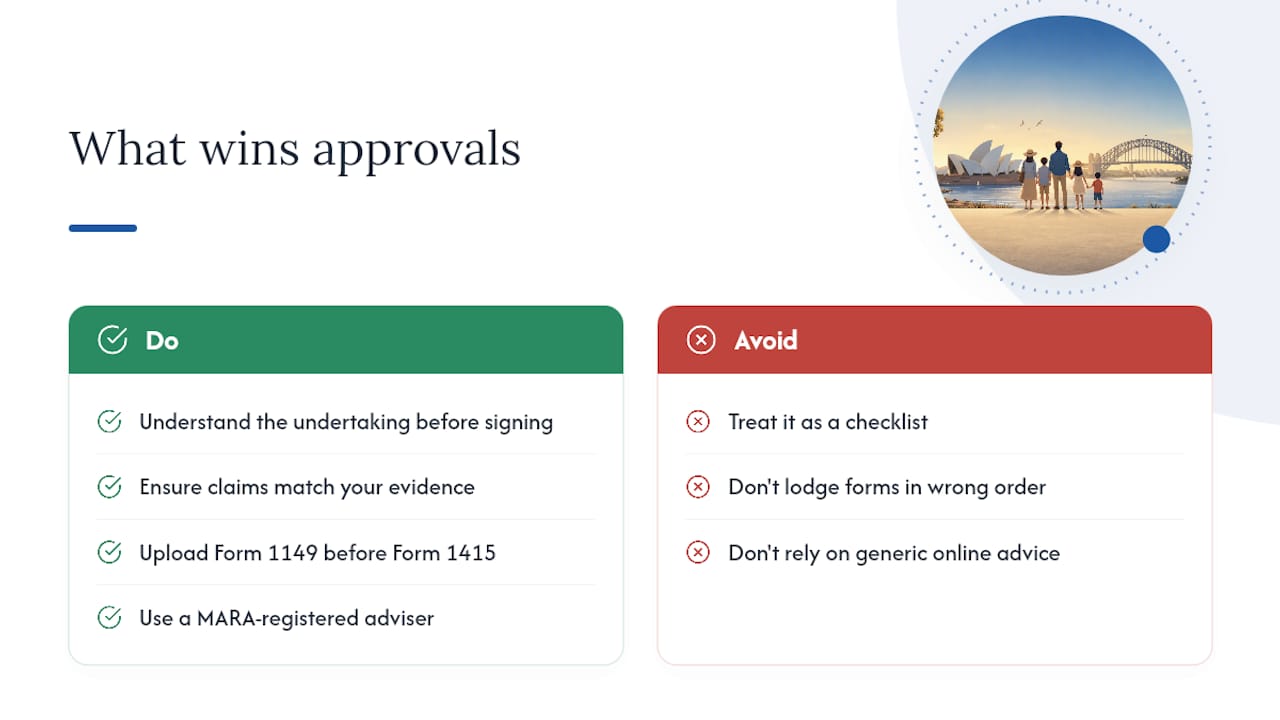
Fewa Education & Migration, based in Sydney, sees this pattern constantly with clients trying to bring parents, siblings, or grandparents to Australia. The applications that stall usually aren’t missing documents. They’re missing consistency between what’s claimed and what’s proven, or they’ve been lodged in the wrong order because nobody explained that Form 1149 needs to sit in ImmiAccount before the visitor touches Form 1415.
Being registered through MARA means Fewa’s guidance carries a professional standard that generic advice online doesn’t. The firms and sponsors who treat this as a checklist exercise underestimate how much weight the Department places on genuine, verifiable relationships. That’s the gap worth closing before you submit anything, not after you get a request for more information.
— Ronit
How Fewa Can Help You Sponsor a Family Member
Sponsoring a relative shouldn’t mean guessing your way through government forms and hoping for the best. Fewa’s visitor visa service exists specifically for sponsors in your position: reviewing your relationship evidence before it goes anywhere near ImmiAccount, checking your Form 1149 for the details that trigger unnecessary delays, and following up after lodgement so you’re not left refreshing a portal wondering what’s happening.
A consultation with Fewa typically starts with a document checklist tailored to your relative’s situation, moves through form completion and submission together, and continues with follow-up support once your application is in the system. If you’re weighing whether to sponsor a parent, sibling, or grandparent and want to avoid the sequencing errors that cause most delays, book a consultation through the Visa services page and get your Form 1149 checked before it becomes a problem you’re solving after the fact.