


Yes, most visitor visa holders in Australia can apply for a new visitor visa while still onshore, as long as no condition on your current visa blocks it. There is no formal “extension” button in the system. What you’re actually doing is lodging a fresh application before your current visa expires.
Your first move today: check your current visa conditions on VEVO and confirm there’s no condition stopping you from applying again.
- Check VEVO for any condition that blocks a further application.
- If clear, start a new application in ImmiAccount before your visa expires.
- Doing this on time usually triggers a Bridging visa A, which keeps you lawful while Home Affairs decides.
Processing snapshot: For the Tourist stream of subclass 600, 50% of applications are decided within 13 to 18 days and 90% within 35 to 55 days. Plan around those windows, not around wishful thinking.
Key Takeaways
Preserving lawful status during a visitor visa extension in Australia depends entirely on lodging correctly, before expiry, with clean evidence of genuine visitor intent.
| Point | Details |
|---|---|
| Check conditions first | Confirm no 8503 or 8558 condition exists before lodging a new application. |
| Apply before expiry | Lodging on time is what typically triggers Bridging visa A and keeps you lawful. |
| Match evidence to intent | Combine financial proof with a return ticket and ties back home to show genuine visitor status. |
| Expect variable timelines | Tourist stream decisions often land within 13 to 55 days; Sponsored Family stream processing times vary depending on individual circumstances. |
| Get professional help when blocked | Fewa offers MARA-registered guidance for waiver requests, sponsor cases, and prior refusals. |
Table of Contents
- Who Qualifies for a Visitor Visa Extension in Australia?
- What Visa Conditions Block a Further Stay?
- How Do You Apply for a Visitor Visa Extension?
- What Documents Do You Need for a Visitor Visa Extension?
- How Long Does a Visitor Visa Extension Take to Process?
- What Happens to Your Status While You Wait?
- What If Your Extension Is Refused or Blocked by Condition 8503?
- Is Extending Different From Applying for a New Visitor Visa?
- Should You Keep Health Insurance During Your Extension?
- Where to Check Your Visa Status and Forms
- What Most Advice on This Topic Gets Wrong
- Get Expert Help With Your Visitor Visa Extension
- Sources
Who Qualifies for a Visitor Visa Extension in Australia?
Eligibility comes down to your stream and your history, not just your intentions. The visitor visa (subclass 600) covers three main streams, and each behaves a little differently when you’re trying to stay longer:
- Tourist stream — the most common onshore extension path, typically for holiday, family visits, or short recreational stays.
- Sponsored Family stream — requires an eligible sponsor and comes with extra document demands but is routinely approved onshore.
- Business Visitor stream — for short-term business activity, generally not intended for repeated stay extensions.
Stay limits matter too. If your current visa already grants close to the maximum period allowed within an 18-month window, a further grant may not be available even if your conditions look clean. A visa cancellation, a previous overstay, or a pattern of back-to-back visitor visas can also work against you, since case officers weigh genuine visitor intent heavily.
What Visa Conditions Block a Further Stay?
Two conditions cause more rejected hopes than anything else in this process. Knowing which one applies to you takes minutes and saves weeks.
- Condition 8503 (No Further Stay) stops you from applying for almost any other visa while in Australia. If this sits on your current visa, an onshore visitor visa extension is off the table unless a waiver is granted.
- Condition 8558 caps how long sponsored family stream visa holders can remain in Australia across a multi-year visa validity period, which limits how often you can renew even without an 8503 condition.
- Check your conditions immediately through VEVO or your ImmiAccount grant letter. If you find an 8503 condition, don’t submit a standard application. It will likely be refused, and a refusal has its own consequences.
How Do You Apply for a Visitor Visa Extension?
Applying onshore follows a specific sequence, and skipping a step or missing the expiry date by even a day can unravel the whole process.
- Sign in to ImmiAccount (or create an account at Online) and select the correct visitor visa stream, matching what you actually intend to do during your stay.
- Start the application before your current visa expires. This timing is what typically triggers a Bridging visa A once your current visa lapses.
- Upload your documents, including identity evidence and the financial and intent evidence covered in the next section.
- Pay the application fee through ImmiAccount using the current pricing shown at the time of lodgement.
- Submit and monitor your account. Home Affairs may request more information (an RFI), and slow responses are one of the most common reasons a straightforward case drags on.
Pro Tip: Submit your application at least two to three weeks before your visa expires, even if you plan to lodge “just in time.” Document uploads sometimes fail, payment gateways occasionally lag, and a rushed submission on the final day leaves zero room to fix an error.
What Documents Do You Need for a Visitor Visa Extension?
A clean application isn’t about volume of paperwork. It’s about answering the two questions a case officer actually cares about: who are you, and why do you intend to leave when you say you will.
- Identity documents: passport bio page, current visa grant notice, and certified translations if any document isn’t in English.
- Financial evidence: recent bank statements covering at least the last three months, proof of funds sufficient to cover your remaining stay, and a sponsor letter if someone in Australia is supporting you financially.
- Genuine visitor intent: a return or onward ticket, a rough itinerary, and evidence of ties back home such as employment, a lease, or property ownership.
- Sponsor proofs (family stream only): your sponsor’s identity documents, proof of their visa or citizenship status, and a signed sponsorship letter outlining the relationship and support offered.
If you’re transferring money internationally to demonstrate funds, keep records of the transfer source. AUSTRAC’s guidance on moving money across borders is worth a quick read if a large or unusual transfer shows up in your statements, since case officers do notice.
How Long Does a Visitor Visa Extension Take to Process?
Processing time depends heavily on which stream you’re in and how complete your application is on day one. For the Tourist stream, Department of Home Affairs data shows 50% of decisions land within 13 to 18 days, and 90% within 35 to 55 days.
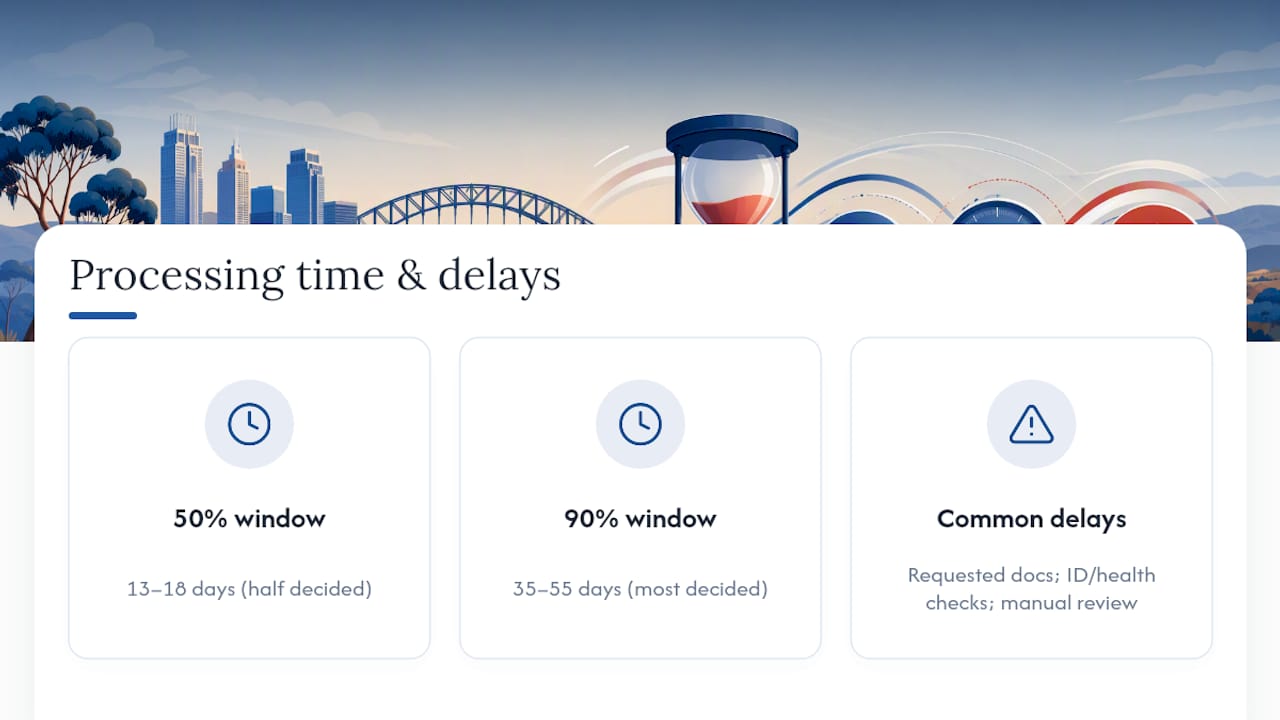
Cases stretch beyond these windows when Home Affairs requests further documents, flags identity or health checks, or when your file needs manual review due to prior visa history. None of these percentiles are guarantees, they’re historical performance figures, so build in a buffer rather than planning around the fastest scenario.
Fees change periodically, so confirm the current cost using the Department’s visa pricing estimator before you pay, and always pay through ImmiAccount directly rather than a third party.
What Happens to Your Status While You Wait?
Lodging your new application before your current visa expires is what typically hands you a Bridging visa A, and this single act of timing is the difference between staying lawful and becoming an overstayer by accident.
- Bridging visa A generally lets you remain in Australia lawfully while your new application is processed, though work and travel rights vary case by case.
- If you need to leave Australia during this period, check your bridging visa’s travel rights first. Leaving without them can end your bridging visa entirely.
- Save every lodgement receipt, payment confirmation, and Home Affairs email. If a dispute over your status ever arises, this paper trail is your first line of defense.
- Recheck VEVO periodically to confirm your bridging visa is showing correctly against your record.
What If Your Extension Is Refused or Blocked by Condition 8503?
If Condition 8503 sits on your visa, your only onshore path is a formal No Further Stay waiver request, granted only in limited compassionate or compelling circumstances.
- Waivers are not routine. Expect to provide strong, specific evidence of why your circumstances have genuinely changed since your visa was granted.
- If your application is refused outright, check whether you have administrative review rights and note the strict time limits attached to lodging one.
- Never let your bridging visa lapse while weighing your options. Overstaying, even briefly, can affect future visa applications for years.
- Consider offshore reapplication if onshore options are exhausted, and get advice from a MARA-registered agent before your bridging visa expires.
Is Extending Different From Applying for a New Visitor Visa?
There’s no legal mechanism in Australia called an “extension.” What most people mean by extending a visitor visa is actually applying for a brand-new subclass 600 visa while still in the country, and the distinction changes how you should think about the whole process.
A genuine extension implies continuity, like adding time to a lease. A new application means Home Affairs assesses you again from scratch: your financial position now, your travel history now, your ties to home now. Nothing carries over automatically. If your circumstances have shifted since your last grant, whether that’s a job loss back home, a new sponsor, or a longer intended stay, the case officer weighs the current picture, not the one that got you approved last time.
This also means the evidence bar isn’t fixed. A second or third consecutive visitor visa application in Australia often draws closer scrutiny of genuine visitor intent, since repeated onshore renewals can look, to a case officer, like an attempt to live in Australia indefinitely on a visa class built for short stays. That’s not a rule written anywhere in black and white, but it’s a pattern worth taking seriously if you’re on your second or third round.
The practical upshot: treat every application as if it’s your first. Refresh your bank statements, update your itinerary, and don’t recycle a sponsor letter from eighteen months ago. Reviewing your current visitor visa options against your actual circumstances, rather than assuming last time’s approval guarantees this time’s outcome, is the single most useful mental shift you can make before you lodge.
Should You Keep Health Insurance During Your Extension?
Australia’s Medicare system generally does not cover visitor visa holders, which means your existing travel or health insurance policy matters just as much during your extension period as it did on day one. A gap in coverage while your new application sits in processing is one of the most overlooked risks in this entire process.

Check your current policy’s expiry date against your expected new visa grant date, not against your old visa’s expiry date. If your insurance runs out while you’re still waiting on a decision, even a routine doctor’s visit or urgent care trip can become a significant out-of-pocket cost. Most travel insurers let you extend a policy from within Australia, but many require you to do it before the original policy lapses, not after.
If you’re on a Sponsored Family stream application, ask your sponsor whether their existing coverage (through an employer scheme or private health fund) can extend to cover you, since some family sponsors already carry dependent coverage that simply needs updating. Beyond insurance, keep other support steady too: notify your bank of your extended stay if you’re using international transfers, update your address details in ImmiAccount the moment you move, and keep a digital copy of every insurance and financial document you submitted, since you may need to reference them again if Home Affairs sends a request for more information partway through your wait.
Where to Check Your Visa Status and Forms
What Most Advice on This Topic Gets Wrong
Most visitor visa guides treat the process like a form-filling exercise: gather documents, submit, wait. That undersells the one variable that actually determines the outcome, which is timing relative to your current visa’s expiry date. Everything else, your bank balance, your itinerary, your sponsor letter, matters less than whether you lodged while still holding a valid visa.
The conventional advice also glosses over Condition 8503 far too quickly. Plenty of visitor visa holders don’t realize this condition exists on their grant until they’ve already tried and failed to lodge a new application, at which point their options narrow sharply to a waiver request with a genuinely high bar for approval.
If there’s one thing worth prioritizing above all else, it’s this: read your grant letter conditions on day one of your visit, not in the final week before it expires. That single habit, checking VEVO early and often, prevents the vast majority of the emergency situations that land people in refusal territory. Everything downstream, the document checklist, the processing time estimate, the bridging visa rights, only matters if you’ve already cleared that first hurdle.
— Ronit
Get Expert Help With Your Visitor Visa Extension
Fewa is the alternative to piecing together your own visa strategy from scattered forum threads and outdated blog posts. As a MARA-registered consultancy based in Sydney, Fewa reviews your specific visa conditions, financial evidence, and application timing before you submit anything to Home Affairs, catching the kind of errors that turn a routine extension into a refusal.
That matters most in the cases this article has flagged as genuinely risky: a Condition 8503 waiver request, a Sponsored Family sponsor whose documents don’t quite fit the standard checklist, a prior refusal on your record, or paperwork that needs translation. These are exactly the situations where a generic guide runs out of useful answers and professional judgment starts to matter. Fewa’s team works through your visitor visa options directly, checks your conditions against your circumstances, and helps you build an application designed to hold up under scrutiny. If your situation has any complexity beyond a straightforward renewal, book a consultation through Fewa’s visa services page before your current visa expires, not after.
This article is general information, not a substitute for advice from a qualified lawyer. Consult a qualified legal professional about your own circumstances before acting on anything here.