


Most Australian visitor visa refusals come down to one of six things: weak financial evidence, doubts about your genuine intention to return home, bogus or altered documents, health findings from the Medical Officer of the Commonwealth, character concerns under section 501, or simply not responding when the Department asks for more information. Your refusal letter will tell you which ground applies, and whether you have review rights or should reapply.
TL;DR:
- Most refusals are due to insufficient financial proof, such as inconsistent bank statements or lack of clear link to trip costs.
- Doubts about genuine intention to return home often lead to refusals, especially if supporting evidence contradicts application details.
- Using fake or altered documents significantly increases legal risks, with penalties including imprisonment under Australian law.
- Non-response to Department requests or discrepancies in travel history can cause refusal, making timely communication critical.
- Reapplications are effective if new evidence addresses specific reasons for refusal; seeking professional advice can improve chances of success.
Table of Contents
- How the department assesses visitor visa applications
- Insufficient financial evidence and what the department actually wants to see
- Genuine Temporary Entrant concerns: proving you intend to go home
- Bogus documents and the legal risk of cutting corners
- Health and character grounds: when the issue isn’t paperwork
- Non-response, identity doubts and prior non-compliance
- Reading the refusal properly: reapply or seek review
- A practical checklist for your reapplication
- When it’s time to bring in professional help
- What we see most often in refused applications
- How we can help with your visitor visa review
- FAQ
- Sources
How the department assesses visitor visa applications
Every visitor visa decision is really a risk assessment. Caseworkers are weighing whether you genuinely intend a temporary visit, whether you can fund that visit without burdening public services, and whether your application is accurate and complete. That’s the lens behind every refusal.
This matters more than ever given current volumes. The Department’s own reporting shows visitor visa lodgements and finalisations have risen, with refusal rates sitting at a notable level in recent reporting periods, still above pre-pandemic levels though trending down as integrity measures bed in.
When a refusal does land, it won’t be vague. The letter sets out:
- The specific legal ground for refusal under the relevant visa criteria
- Whether you have access to merits review through the tribunal, and the deadline to lodge it
- Any factual findings (financial shortfall, credibility concerns, document issues) that drove the decision
Read it line by line before you do anything else. It’s the most useful document you’ll have for your next move.
Insufficient financial evidence and what the department actually wants to see
Financial refusals happen when the Department isn’t convinced you can cover your trip, and your return, without needing to work illegally or rely on public funds. Acceptable evidence usually includes:
- Bank statements showing a sustained balance over several months, not a lump sum that appeared the week before you applied
- Recent payslips, tax returns or audited business accounts
- A sponsor’s affidavit of support, where someone else is funding the trip
Caseworkers get wary of short or patchy statement histories, unexplained large deposits, and documents that can’t be independently verified. The fix isn’t just showing money exists. It’s showing the money matches your trip costs and that you’ll still have a financial life to return to at home.
Pro Tip: Attach a simple one-page summary matching each cost (flights, accommodation, daily spending) to the specific account or document that covers it. It turns a pile of statements into an obvious story.
Readers preparing financial paperwork for a student pathway instead might find our guide to meeting the student visa financial capacity test a useful comparison of what strong evidence looks like.
Genuine Temporary Entrant concerns: proving you intend to go home
Subclass 600 exists for genuine, temporary visits, so the Department wants proof you have real reasons to return home on time. This is often called the Genuine Temporary Entrant, or GTE, assessment, and a weak one is one of the most common refusal grounds we see.
Strong supporting evidence usually includes:
- A letter from your employer confirming your job, leave approval and return date
- Enrolment confirmation if you’re studying at home
- Property ownership, a lease, or business registration tying you to your home country
- Evidence of immediate family remaining at home, especially dependent children or a spouse
The biggest self-inflicted wound here is inconsistency. If your visa application says one thing about your job or plans and your supporting letter says another, that contradiction alone can sink an otherwise solid case. Write your explanation once, check it against every attached document, and keep it specific rather than generic.
Bogus documents and the legal risk of cutting corners
A bogus document isn’t limited to an obvious forgery. It includes an altered bank statement, a backdated employment letter, or a photo that’s been digitally edited. The Department treats these as integrity failures, not paperwork mistakes.
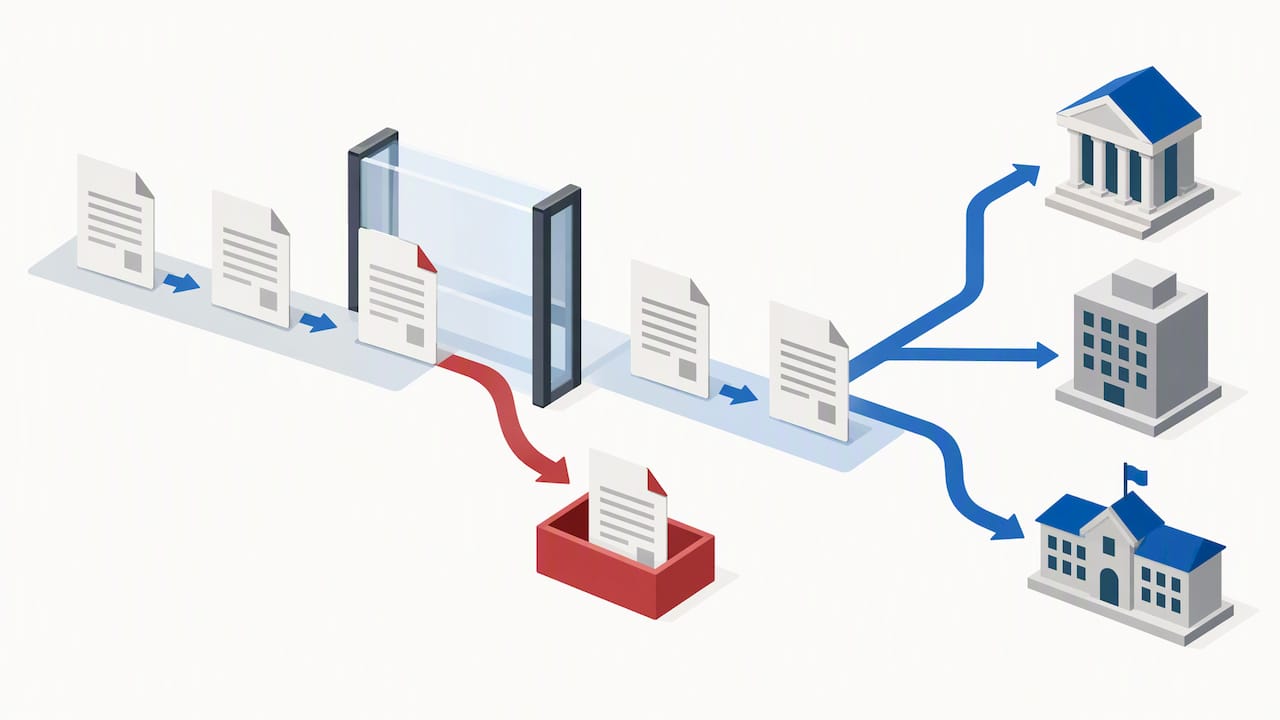
Fraudulent or altered documents carry serious legal weight in Australia. Under section 234 of the Migration Act 1958, presenting false or forged documents is an offence carrying a penalty of up to 10 years’ imprisonment or 1,000 penalty units, well beyond a simple visa refusal.
The safest path is boring but effective: submit certified originals, use accredited translators, and only include documents that can be verified directly with the issuing bank, employer or institution.
Health and character grounds: when the issue isn’t paperwork
Some refusals have nothing to do with how well you’ve filled in a form. Health refusals come from the Medical Officer of the Commonwealth, who assesses whether a condition is likely to threaten public health or place significant demand on Australian health and community services. Private health insurance or personal wealth doesn’t change that assessment.
Character refusals sit under section 501 and typically involve criminal history or past conduct the Department considers relevant to the character test. The one mistake that makes a borderline character case unsalvageable is non-disclosure. Leaving something out doesn’t make it disappear, it just adds an integrity problem on top of whatever the original issue was.
If either ground applies to you:
- Provide complete, accurate medical reports if the MOC requests further examination
- Obtain police checks for every country you’ve lived in, not just your home country
- Disclose fully and early rather than waiting to be asked twice
Non-response, identity doubts and prior non-compliance
A surprising number of refusals have nothing to do with your circumstances and everything to do with communication. The Department sends a request, you don’t see it or don’t respond in time, and the file gets decided on what’s already there.
Common triggers include:
- Missed verification requests sent to your nominated email or ImmiAccount inbox
- Inconsistent travel history or passport details across different documents
- A previously cancelled or refused visa that wasn’t properly disclosed
You’re also obligated to keep the Department updated. Forms 1022 and 1023 exist specifically for notifying changed circumstances or correcting an earlier mistake, and failing to use them can turn a minor error into a cancellation risk later.
Pro Tip: Check your ImmiAccount and email (including spam) weekly while your application is pending. A response that’s even a day late can mean a decision made without your input.
Reading the refusal properly: reapply or seek review
Your refusal letter is the map for what happens next. It will state plainly whether the decision is subject to merits review by the tribunal, and if so, the strict deadline to lodge it. According to tribunal guidance, not every visa decision is reviewable, and where judicial review is the only option, courts examine jurisdictional error rather than re-weighing the merits of your case.
Merits review looks again at the facts and the decision; judicial review only checks whether the decision was made lawfully. They are not interchangeable paths, and picking the wrong one wastes your limited window.
Before choosing a path, work through:
- Does the letter mention a review body and a deadline? If not, review likely isn’t available and reapplying is your route forward.
- Can you genuinely add new, stronger evidence, or has nothing changed since the refusal? Review suits cases where the original decision got the facts wrong. Reapplication suits cases where your circumstances have genuinely improved.
- Is the clock already tight? Tribunal deadlines are short and strict, so don’t spend a week deciding.
A reapplication only helps if you can show real change: new financial evidence, a corrected GTE statement, or resolved identity and disclosure issues. Submitting the same file twice produces the same result twice.
A practical checklist for your reapplication
Rebuilding a refused application works best in a set order, addressing the Department’s stated concern first and then reinforcing everything around it.
- Pull the exact ground for refusal from your letter and address that evidence first
- Gather certified financial records covering a longer, consistent period
- Collect fresh employer or study confirmation letters with specific return dates
- Add property, business or asset evidence tying you to your home country
- Compile a clean, consistent travel history across all documents
- Complete any medical examination the MOC has requested, in full
- Disclose any criminal history fully, even if it feels irrelevant to this trip
Pro Tip: Upload documents to ImmiAccount in the same order as the checklist above. A caseworker working through an organised file is less likely to send a verification request than one working through a scattered one.
Our visitor visa checklist for applicants walks through document formatting in more detail if you want a second reference point while you prepare.
When it’s time to bring in professional help
Some refusals are straightforward to fix yourself. Others, particularly character findings, complex medical assessments, conflicting historical records, or genuine uncertainty about whether review is even available, benefit from a second set of trained eyes.
A MARA-registered adviser can read your refusal letter accurately, tell you honestly whether reapplication or merits review gives you better odds, and help assemble documents that directly answer the Department’s stated concern rather than just adding more paper to the file.
If you’re preparing for a consultation, bring your full refusal letter, every document you originally submitted, and anything new that’s changed since (a new job, resolved finances, updated family circumstances).
What we see most often in refused applications
— Ronit
Most refusals we review aren’t hopeless. They’re financial evidence that was too thin, a GTE statement that contradicted itself, or a missed document request sitting unread in an inbox. The honest fix is almost always the same: read the refusal letter as a diagnosis, address exactly what it names, and disclose fully rather than hoping an issue goes unnoticed. Concealment rarely works twice.
How we can help with your visitor visa review
If you’ve been refused and aren’t sure whether to reapply or seek review, professional consultation can help you understand your refusal letter and plan your next steps. Experienced migration advisers can read the specific ground for refusal, assist in building financial and GTE evidence where it’s weak, and prepare documents that address the Department’s concerns directly rather than repeating what didn’t work the first time.
Bring your refusal letter and original application documents to your first session, that’s genuinely the fastest way for us to tell you where you stand. We also assist with:
- Visitor Visa (SC 600) reapplications and document preparation
- Family Visa and Partner Visa (SC 820/801) matters where ties to Australia are part of the picture
- Skilled Migration Visa and Employer Sponsored Visa pathways for longer-term plans
Start with a free consultation through our Visitor Visa service page and bring your documents along.
This article is general information, not a substitute for advice from a qualified lawyer. Consult a qualified legal professional about your own circumstances before acting on anything here.
FAQ
How long after a visitor visa refusal can I apply in Australia?
There’s no single universal waiting period, it depends on what your specific refusal letter states and whether a related visa condition applies. Check the letter for any stated restriction, and if none is mentioned, you can generally reapply once you’ve addressed the ground for refusal.
What are the most common reasons for visa denial to Australia?
The most common grounds are insufficient financial evidence, doubts about genuine intent to return home (the GTE assessment), bogus or altered documents, and failing to respond to a Department request on time. Health findings from the Medical Officer of the Commonwealth and character concerns under section 501 account for a smaller share of refusals but are harder to resolve.
What should I do if my visitor visa was refused?
Read your refusal letter closely to identify the exact ground cited and whether merits review is available, including the deadline to lodge it. From there, decide whether a fresh application with genuinely stronger evidence, or a formal review through the tribunal, better suits your situation.
What is the most common reason for a visa rejection?
Weak or inconsistent financial evidence is one of the most frequent refusal grounds, closely followed by doubts about an applicant’s genuine intention to return home. Both usually stem from documentation that doesn’t clearly or consistently support the story told in the application.
Sources
- Medical officer assessment — parliamentary source / Home Affairs material
- Administration of immigration and citizenship programs — Department of Home Affairs program report
- AAT guidance on immigration and citizenship review